
St Mungo’s responds to modest decrease in rough sleeping in London

New data released this week (30 June 2026) by the Combined Homelessness and Information Network (CHAIN) shows a modest decrease in rough sleeping in London in 2025-26. In total, 12,938 people were recorded as rough sleeping in London during the last year. This is a decrease of 2% from 2024/25, but 60% higher overall than the total of 8,108 people seen rough sleeping ten years ago, in 2016/17. The data also shows that during this period: This is only the third time in a decade that rough sleeping numbers have decreased from the previous reporting year. There was a 5% increase in the number of people who were seen rough sleeping for two or more consecutive years, from 3,028 to 3,184. The proportions of people seen rough sleeping with a mental health need increased in 2025/26, with 52% recorded as having a mental health support need, compared to 48% in 2024/25. Chief Executive of St Mungo’s, Emma Haddad, said: “We will always welcome any decrease in rough sleeping across the capital. This is a step in the right direction, and any reduction marks fewer people facing the terrible prospect of sleeping on the streets of London. We hope that decreases like these can be a consistent trend, and across the sector, we can continue to build on this progress. A 2% reduction is promising, but we must also acknowledge the scale of the challenge ahead. Last year, over 12,000 people were recorded as sleeping on the streets of the capital. This is the second highest number on record since reporting began, and 60% higher than the number of people counted a decade ago. St Mungo’s teams are out on the streets every day, working tirelessly to meet people when they are most vulnerable and have nowhere else to turn. We know that the longer someone spends on the street, the more their health needs will increase and the more serious is the risk to their life. Our teams support thousands of people every night, from those contending with freezing temperatures in the winter months, to people trapped in record breaking heatwaves and forced to sleep on a hot concrete pavement. At St Mungo’s, we are working alongside the GLA, local authorities and partner organisations across the capital to be there for people before they reach these crisis points. We hope that London’s efforts to reduce rough sleeping will now be backed up by further action and sustained investment as part of the government’s National Plan to End Homelessness so that we can achieve the Mayor of London’s promise to end homelessness on the city’s streets by 2030.”
St Mungo’s responds to the repeal of the Vagrancy Act

Today, the Vagrancy Act has officially been repealed. This is an important part of an ambitious legislative package that aims to protect society’s most vulnerable rather than penalise them. The Vagrancy Act, which was introduced in 1824, was an outdated piece of legislation that criminalised rough sleeping. Its repeal offers new protections for people affected by homelessness in England and Wales because it prevents them from being fined or imprisoned for sleeping rough or begging. The factors that have been driving the steady rise in homelessness over the past decade will not be addressed by the repeal of this Act alone, but it promotes a more compassionate approach towards helping homelessness, which is a positive change and something St Mungo’s gladly welcomes. Emma Haddad, Chief Executive of St Mungo’s, said: “The repeal of the Vagrancy Act marks a defining moment in how society views and responds to people experiencing homelessness. For too long, the Act has criminalised people with nowhere safe to call home and reinforced stigma, rather than putting the focus on rebuilding lives. Our Outreach teams see every day how people can fall into homelessness when housing and support aren’t in place. When people are sleeping on a pavement, we know that the last thing they want or need is to be arrested. This makes it that much harder for people to access support – either because they have been pushed away from it or they choose not to access it due to distrust. This change marks an important shift towards a more humane approach – one that focuses on support, tackles root causes, and helps prevent homelessness. Effective delivery of the Government’s recently published National Plan to End Homelessness will hinge on doing exactly that.”
St Mungo’s warns of risk to life for people sleeping rough during heatwave
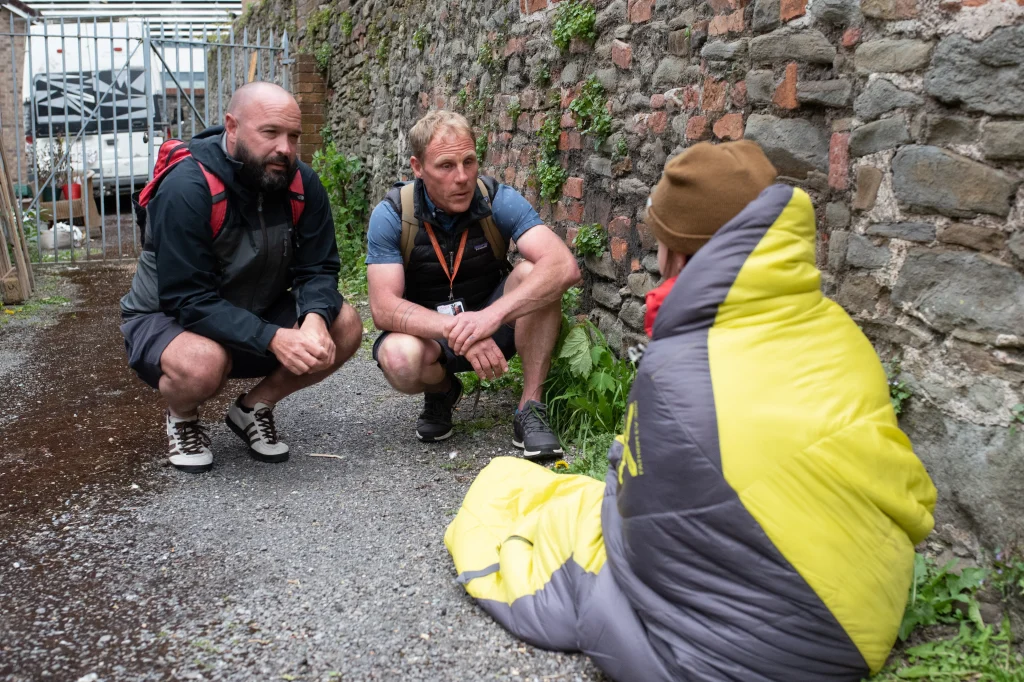
St Mungo’s is urging caution as temperatures rise, warning that people sleeping rough face a serious risk to their health and lives during extreme heat. The homelessness charity’s warning follows a rare Red Weather Alert issued by the Met Office for Wednesday 24th June, and Thursday 25th June, signalling potential disruption to essential infrastructure alongside a heightened risk of severe illness and death. St Mungo’s is also sharing advice on how the public can support people experiencing homelessness during the hot weather. Claire Hopkins, Head of Specialist Rough Sleeping Services at St Mungo’s, says: “Soaring temperatures can be deadly for those who are sleeping rough. On the streets, it can be difficult to access water, sunscreen, and places to shelter from the sun, meaning that those experiencing homelessness have a particularly high risk of developing life-threatening heat-related illnesses such as heat exhaustion, dehydration, or heat stroke. It is right to treat this current heatwave as an emergency. As ever, St Mungo’s teams are prepared to respond to this critical situation. We will continue to work tirelessly, with the support of local authorities, to ensure people sleeping rough have access to water, shelter, and sun cream. We will also increase the number of Outreach shifts taking place during this time. People can help those who are sleeping rough during the hot weather by offering water or sun cream, and can also contact Streetlink to connect people experiencing homelessness with local support. When somebody requires urgent medical assistance, call 999.”
St Mungo’s Head of Pan London Rough Sleeping Services and Prevention Hannah Faulkner recognised with MBE in the King’s Birthday Honours
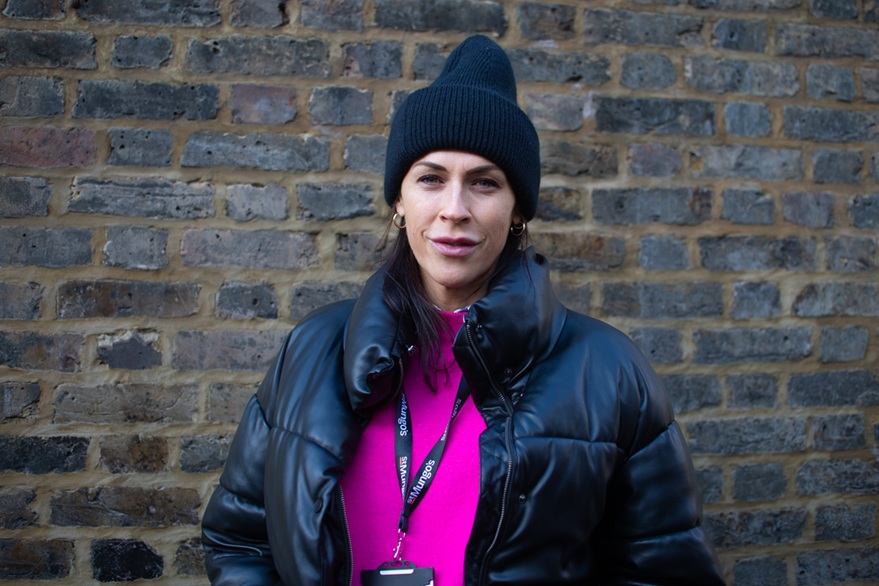
St Mungo’s Head of Pan London Rough Sleeping Services and Prevention Hannah Faulkner has been awarded an MBE in the King’s Birthday Honours list. The award acknowledges Hannah’s unwavering commitment to delivering the highest quality services for people experiencing homelessness over the course of more than 20 years, most recently as the lead for the Mayor of London’s No Second Night Out service (NSNO). Hannah established the blueprint for NSNO, which operates across all 32 London boroughs as a rapid response for supporting people to move away from rough sleeping as soon as possible. Under her leadership, the service has become known both for the urgency of its approach and the expertise of the team. Not only this, but the service is integral to the delivery of the Pan London Severe Weather Emergency Protocol (SWEP), providing immediate routes off the street in extreme cold and heat. In 2020, the first lockdowns led to the closure of the NSNO communal hubs, however Hannah and her team transformed this into an opportunity to spearhead the national Everyone In Campaign, which aimed to swiftly bring people sleeping rough into COVID-secure accommodation. This programme was a resounding success, with estimates stating that 37,000 people were given safe accommodation during the pandemic nationwide, 6,073 (16%) of which were directly supported by Hannah’s teams. Since reopening, NSNO has been supporting approximately 1,800 people across London each year, and 88% of people using this service who were subsequently rehoused have not returned to rough sleeping. In support of her nomination, representatives from the Greater London Authority remarked on Hannah’s substantial and lasting contribution to the rough sleeping sector, consistently applying innovative, flexible, and responsive methods to adapt and mobilise services effectively. She has a lot of passion for her work, is consistently driving improvements in service delivery, and under her guidance, her team has helped thousands of people off the streets of London. Reacting to the announcement of the MBE, Hannah said: “I’m honestly stunned. It’s such a lovely gesture from the people who nominated me, but this really belongs to so many people across the organisation—it reflects the dedication and hard work of colleagues I’ve been lucky to work alongside. Ending rough sleeping is a collective effort. Every day, I see teams supporting people with compassion and determination—helping individuals off the streets as quickly as possible, while working towards longer-term solutions so they don’t have to return to rough sleeping. My colleagues continually inspire me and drive me to achieve the best possible outcomes for the people we support. There’s still more to do, but I’m proud to be part of a shared commitment to making lasting change.” Emma Haddad, St Mungo’s CEO, said: “This Honour is brilliant recognition of Hannah’s decades of leadership across homelessness and rough sleeping, and I am so delighted for her. Through her leadership, thousands of people have been supported off the streets and into homes of their own. Moreover, Hannah is a fearless proponent of change, always challenging the status quo and searching for new, more impactful approaches. Her contribution to St Mungo’s and to the homelessness sector as a whole has been significant and enduring.”
Free flu jabs announced for people experiencing homelessness

People experiencing homelessness will be given free flu vaccination on the NHS Vaccinations will be made available as part of the rollout later this year and ahead of winter Government fulfilling its promise to help protect those most at risk People experiencing homelessness in England will be offered free flu jabs on the NHS. A vaccination programme will support those experiencing rough sleeping and people staying in homeless hostels or night shelters, protecting people at high risk of serious respiratory illness who are too often left behind. We know that people experiencing homelessness are more likely to experience worse NHS access, worse outcomes and to die younger. Through the 10 Year Health Plan, the government vowed to provide an NHS designed to tackle such inequalities and give everyone, no matter who they are or where they come from, the means to engage with the NHS on their own terms. The flu vaccination programme for people experiencing homelessness will begin in Autumn, in line with when the next season of flu vaccinations are available. The update comes after the government accepted the expert advice from the Joint Committee on Vaccination and Immunisation to make NHS pneumonia and seasonal flu vaccinations available to those experiencing homelessness. Steve Davies, Regional Head at St Mungo’s, said: “Contracting the flu can be dangerous even with a roof over your head. Experiencing homelessness alongside the flu can dramatically increase the risk of hospital admission – and even death. “Health needs generally are becoming more acute amongst the people we support. Initiatives like this go a long way to preventing people who are homeless from being overlooked in this wider crisis in public health. “Under the NHS 10 Year Plan and through wider collaboration across government and charities, we need to continue to ensure that every person facing homelessness has access to a healthcare system that enhances – rather than reduces – their life.” JCVI advice shows people experiencing homelessness face very high levels of poor health and can be at similar, or even greater, risk from flu and pneumonia disease than some groups already routinely eligible for vaccination. Many other groups of people already receive free flu vaccination, including people over the age of 65, pregnant women, people with long-term health conditions, people who are immunosuppressed, carers and household contacts of people with immunosuppression. This change builds on that wider protection by making sure people experiencing homelessness are not overlooked and can get the same chance to stay well through winter.
Significant rise in hidden women experiencing homelessness, says St Mungo’s

Today marked the launch of this year’s Women’s Rough Sleeping Census data launch. Over 100 local authorities worked hand in hand with partners like St Mungo’s to shine a light on the hidden women experiencing homelessness. The Census shows that there were 10 times as many women identified as rough sleeping in certain areas, in comparison to official government statistics from the Rough Sleeping Snapshot. There was a 39% increase in the number of women identified as sleeping rough since the 2024 Census data was collected. Emma Haddad, CEO at St Mungo’s, says: “Today’s findings from the Women’s Rough Sleeping Census show the extent to which women are being overlooked in homelessness and underrepresented in official data. “Our outreach teams work tirelessly to find and support women who are sleeping rough in places that people would not necessarily associate with homelessness. We know that women experiencing homelessness are more likely to seek out safer public spaces to reduce the risk of harm – whether that’s train and bus stations, hospital waiting rooms, nighttime transport networks or 24-hour cafés. “Many women have been forced onto the streets due to harassment, abuse and violence, only to face further danger when sleeping rough. This means that not only is their homelessness less visible, but the complexities of their experiences also make accessing specialist support even more critical. “At St Mungo’s we know how important it is to provide specialist support to women. Our services provide safe, supportive and trauma-informed environments where women can access vital support and begin to rebuild their lives. “Currently, the Women’s Rough Sleeping Census is the only collection of data and insight that brings together local authorities and charities to build a clearer picture of women’s homelessness, ensuring that more women are seen, heard and supported. “This vital work remains fragmented however, and too many women continue to go unseen. We are calling on the Government to work in partnership with local authorities and charities and make the Women’s Rough Sleeping Census a national requirement. Only then can we ensure that every woman experiencing homelessness is counted and supported.”
Clients inspired by visit organised with Stanhope Foundation and Sir Robert McAlpine
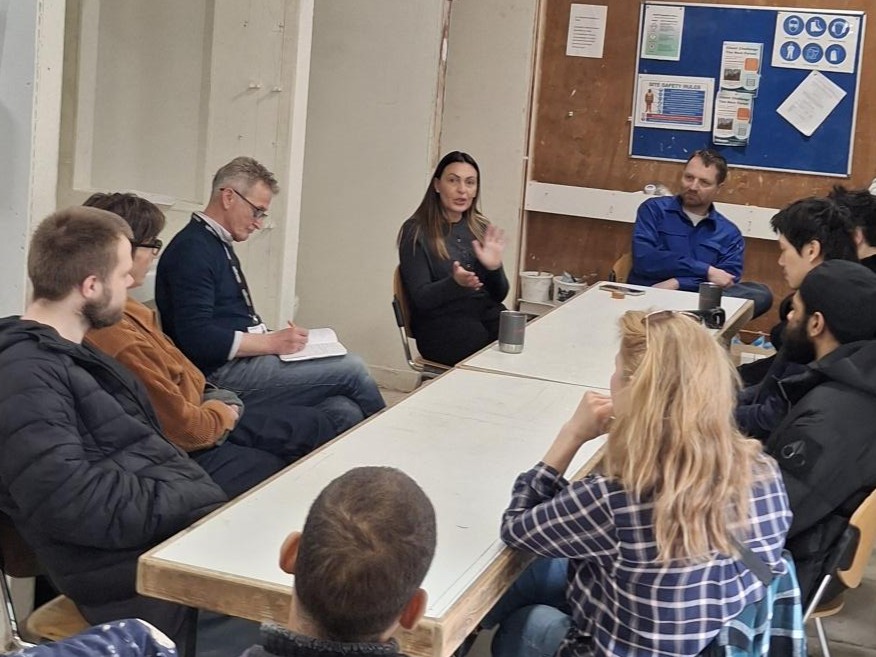
We had the pleasure of an amazing talk on routes into construction, apprenticeships as an older person, and women in construction from Sophie, a Surveyor at Sir Robert McAlpine. We met Sophie through our partners at the Stanhope Foundation, and after seeing the incredible work being done at the Multi-Skills Hub, she kindly volunteered her time to come back and talk with our clients. From the moment she started speaking, you could feel the room change. We were all blown away. The talk was honest, gritty, knowledgeable, and genuinely powerful. Sophie didn’t just talk about construction as an industry, she broke it down in a way that made it feel real and accessible. She spoke about different routes in, not just the traditional path, but apprenticeships later in life, starting from the bottom and working up, and finding your place even when you’re not sure where you fit. She spoke openly about challenges, about not always knowing what direction to take, and about pushing through anyway. That honesty is what connected. For many of our trainees especially those who have experienced homelessness figuring out what you want to do in life can feel overwhelming. The idea of a long-term career can feel distant. But Sophie’s talk cut through that. It showed, clearly and powerfully, that with hard work, determination, and the right support, there are real pathways forward. You could see it happening within the room ,trainees who would normally sit back were leaning in. Listening closely, following every word. Then came the questions curious, thoughtful, and full of intent. She helped people explore options they hadn’t considered before: What would be my best route? gaining further qualifications, starting at entry level, or stepping into apprenticeships? Giving clients different variations and out comes all with a with a clear sense of progression. Hearing that people within Sir Robert McAlpine a company with over 150 years of Construction history, delivering some of the UK’s most iconic construction projects had staff at director level who started out as apprentices was a real eye-opener. It made progression feel real It showed that success isn’t one straight path it’s something that can be built over time. The support from our partners through sponsoring programmes, supplying materials, helping with further training, and offering site visits is something we are incredibly grateful for, and we simply wouldn’t be able to do what we do without them. But talks like Sophie’s and the training hubs go even deeper than that. They bring everything to life. They open minds. They shift thought patterns. They give people something they may not have felt in a long time….belief. Belief that they can achieve. Belief that there are real opportunities out there. Belief that their past doesn’t define their future. And what really showed the impact was what happened after the session. Clients didn’t just leave. They stayed. They gathered around Sophie, continuing the conversation over a coffee asking more questions, opening up about their own journeys, wanting to know how they could take those next steps. Conversations that wouldn’t normally happen, happening naturally. And that’s exactly why this work matters with our training and partnerships who invest in our clients journeys.
Launching the Kerslake Fellowship: Honouring a Legacy, Shaping the Future
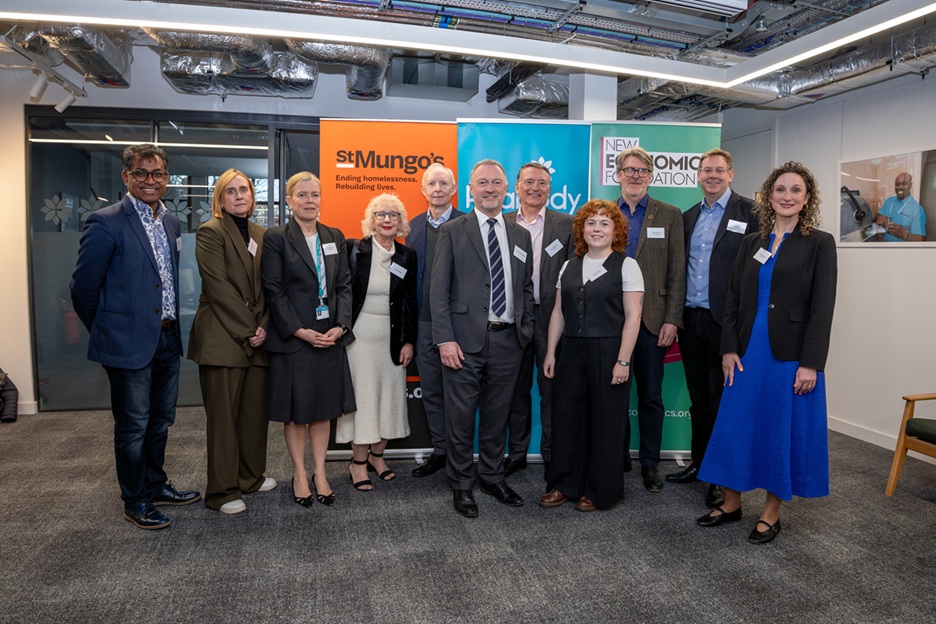
Last week, we were proud to mark an important moment for the housing and homelessness sector: the launch of the Kerslake Fellowship, a new research and policy post delivered in partnership by New Economics Foundation (NEF), Peabody and St Mungo’s. The launch event was attended by individuals who each carry a special connection to this work and its legacy. Our Chairman, Mike Adamson had the honour to introduce and welcome, Lady Anne Kerslake and Eleanor Kerslake, the wife and daughter of the late Lord Bob Kerslake. The Secretary of State for Housing, Communities and Local Government, Steve Reed, spoke about his fond memories of the late Lord Bob Kerslake and welcomed the fellowship, sighting the importance of needing fresh new ideas to tackle the housing crisis. About the Kerslake Fellowship The Kerslake Fellowship is a collaborative initiative funded by the NEF, Peabody, and St Mungo’s. Over a two year tenure, The Kerslake Fellow, Dr Grace Brown, will lead the design and delivery of a package of research that cuts across core issues we are currently facing in housing and homelessness. This work will culminate in the publication of research at the end of the Fellowship, that will contribute meaningfully to national policy and debate. Building on the Legacy of the Kerslake Commission Lord Kerslake was a deeply respected leader, a dedicated champion of housing, homelessness and local government. His principled, caring and persistent commitment to improving lives shaped the work of the Commission and continues to inspire us and many others across the sector. At St Mungo’s, we are incredibly proud of the role we played in supporting and developing the work of the Kerslake Commission, launched by the late Lord Kerslake in March 2021. The Commission examined and drew lessons from the emergency response that supported people sleeping rough during the COVID19 pandemic. It brought together voices from across the housing and homelessness sector, along with colleagues in local and central government, to understand what worked and what must be carried forward. Carrying the Work Forward In the spirit of collaboration and determination that Lord Kerslake championed, we’re excited to be working with colleagues at NEF and Peabody to support this new Fellowship and ensure his legacy continues to guide and strengthen our collective mission. We look forward to seeing the impact of Grace’s work and to sharing the insights that emerge over the coming years.
Record numbers of people rough sleeping in England, St Mungo’s responds

Rough sleeping in England reached record highs last autumn, as new statistics released today (26th February 2026) show the fourth annual increase in a row. The rough sleeping snapshot is an annual single-night estimate of the number of people sleeping rough in England, carried out by local authorities between 1 October and 30 November each year. It provides a point-in-time measure of visible street homelessness and is used to track national trends in rough sleeping. According to the new figures: 4,793 people were estimated to be rough sleeping in England on a single night in autumn 2025, a rise of 3% since 2024 This is the fourth successive rise in a row, and a staggering 171% higher than 2010 when records began The figures also show that 43% of all people sleeping rough are in London and the South East 1,277 people were estimated to be rough sleeping in London, a decrease of 3% from 2024 A record number of women were estimated to be sleeping rough at 733 The Ministry of Housing, Communities and Local Government also released new figures on statutory homelessness in England today, identifying the numbers of people approaching their local councils for help preventing or relieving their homelessness between July to September 2025. This data reveals that: A record 134,760 households were living in temporary accommodation at the end of September 2025, a rise of 7% from the same period last year Over half (60%) of people supported to prevent or relieve their homelessness in this period had one or more additional support needs – with a history of mental health problems accounting for the largest proportion 81,360 people were offered support by their local council to prevent or relieve their homelessness, down 2.6% from July to September 2024 Of these, 44,970 people were deemed already homeless and offered support, down 2.3% from the same quarter last year The number of households threatened with homelessness because of Section 21 eviction notices has decreased by 18% Responding to the figures, Emma Haddad, Chief Executive of St Mungo’s, said: “Homelessness, in all its forms, continues to rise across England: a devastating reality shown again in today’s statistics. On a single night last autumn, a record 4,793 people were sleeping rough in England– the fourth annual increase running, and a 3% rise on autumn 2024. Meanwhile, a record 134,760 households are stuck in temporary accommodation –a rise of 7% from the same period in 2024. Behind every statistic is a human story, with the profound instability taking a significant toll on mental and physical health. Together, these figures expose the depth of this emergency as thousands of people continue to struggle without the security of a stable home, and many more teeter on the brink of losing theirs. At St Mungo’s, our frontline teams meet people when they are most vulnerable and have been forced to sleep on the streets with nowhere else to turn. We see how the chronic shortage of social and affordable housing, combined with overwhelmed support services, traps people into prolonged homelessness as they wait too long for the help they need. We also see how easily people leaving hospital, prison or care can fall through the cracks of the system and end up on the streets. The Government has set out its ambition for change in the National Plan to End Homelessness, and the real challenge now is delivery. What will move the needle is sustained, structured support from frontline services like St Mungo’s backed by clear lines of accountability across Government. Funding is also essential, and today’s announcement of £15 million as part of the Long-Term Rough Sleeping Innovation Programme is much welcomed. Sustained investment will be key to driving change and realising our shared goal of ending homelessness for good.”
Module 10 of Covid-19 Inquiry, St Mungo’s responds

On 16th February 2026, hearings began for Module 10 of the Covid-19 Inquiry examining the ‘Impact on society’. This included the publication of a roundtable summary report into the pandemic’s impact on the housing and homelessness sector, which St Mungo’s contributed towards. Responding to the summary report, Sean Palmer, Executive Director of St Mungo’s, said: “The publication of the Housing and Homelessness Roundtable Summary Report as part of Covid-19 Inquiry Module 10 marks an important moment of reflection for everyone committed to ending homelessness in the UK. It brings together the key lessons from the sector’s extraordinary response during Covid?19 and shows that, even in the most challenging circumstances, meaningful and rapid change is possible. The ‘Everyone In’ initiative was a landmark government intervention that ensured people experiencing homelessness, or at risk of it, were brought into emergency accommodation during the pandemic. In a homelessness system where too many people fall through the gaps, it created – for a time – a safety net for everyone affected by homelessness regardless of what eligibility they previously had to homelessness support. Thanks to the dedication and hard work of St Mungo’s colleagues and volunteers, and partners across civil society and government, thousands of people were given a safe place to stay during lockdown and vital support. It proved that bold, rapid, and collaborative action works for an issue as significant as homelessness. However, since ‘Everyone in’ ended, homelessness levels are continuing to rise steadily – this is deeply concerning for the sector and the people it supports. The report’s recommendations must now prompt a renewed sense of urgency to recreate the same ambition and cross-sector collaboration across the entire recovery journey, from that first move off the streets to finding a place that someone can finally call their own. The Government’s National Plan to End Homelessness shows its ambition to achieve this, but meaningful, long-term investment in the sector will be essential to turn that ambition into lasting change.” You can read the report in full here