Supporting people in the Roma community sleeping rough in London with partners across the sector.
Roma are the largest ethnic minority group in Europe. There are 13 million Roma in Europe. However, this is likely to be an underestimate.
Roma people live all over the world have a distinct language and culture.
We work with partners across the statutory, voluntary and faith based services to:
Our team is passionate about supporting the Roma community. Some of us are Roma ourselves and have experienced some of the same challenges that our clients face on a day-to-day basis. All the team have the in-depth understanding of Roma culture that is required to help them leave homelessness behind for good. The team is funded by the GLA and MHCLG and delivered in collaboration with The Passage.
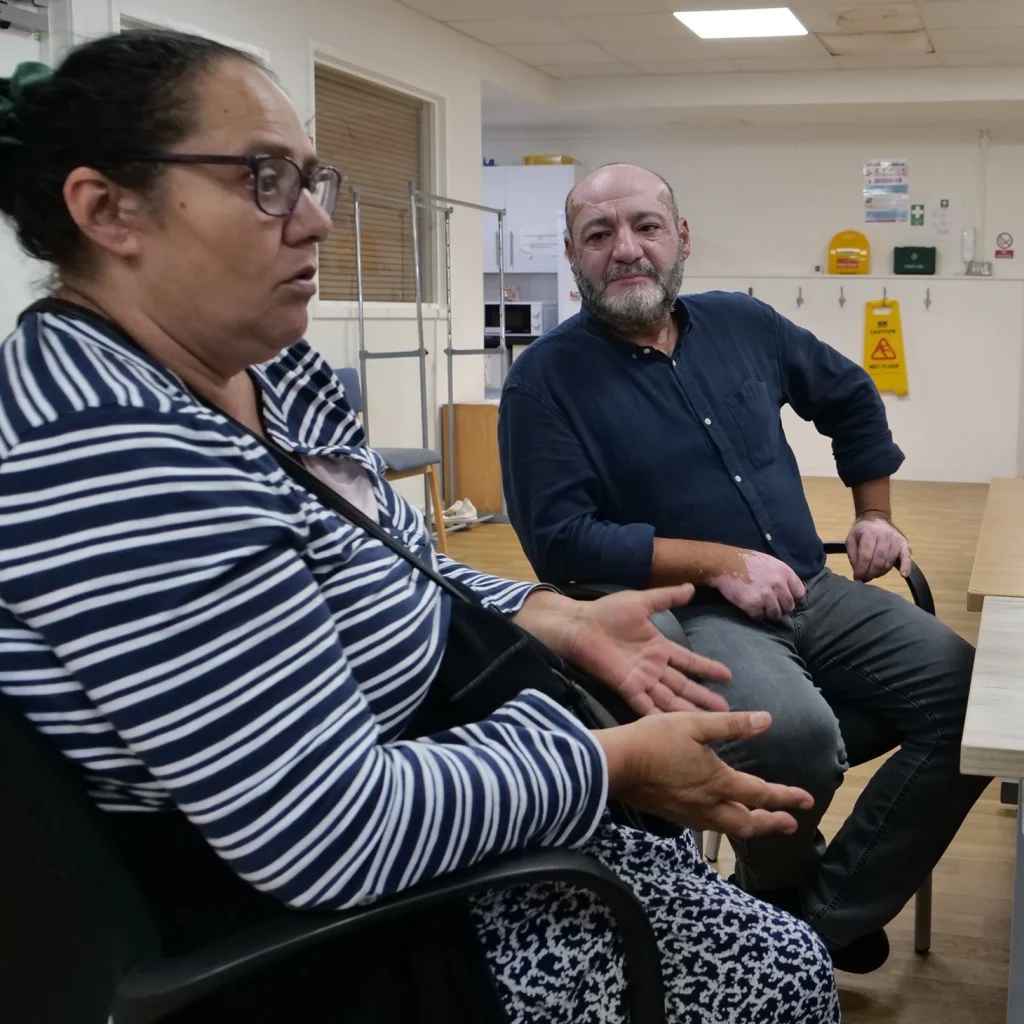
Our team shares best practice and resources that will help provide better quality and culturally competent support to the Roma Community.
It is really important all our clients are supported to understand how the EU Settled Status Scheme works and what this means for their rights and entitlements, as well as how to engage with UK healthcare and other services.
This can be challenging for some Roma individuals who struggle to read and write, so we provide video and audio options translated into Romani wherever possible.

Roma Rough Sleeping Team Advice Line
If you are working with people from the Roma community who are rough sleeping, you can contact our advice line any time Monday to Friday 9.30 am – 5.30 pm.
Find out more here.
Roma Rough Sleeping Team Advice Line
If you are working with people from the Roma community who are rough sleeping, you can contact our advice line any time Monday to Friday 9.30 am – 5.30 pm.
Find out more here.
Roma Mediators
Our team has three Roma mediators that work across London and Kingston who support outreach teams to engage with the most complex Roma clients.
Outreach Teams can request a mediator to join a shift and support with engaging complex Roma clients or attending hotspot sites. Please contact the team here.
Employment and Immigration Advice
If you are working with Roma rough sleeping individuals who are in need of immigration advice and cannot access this via local routes, or who need specialist support to access employment then please get in touch.
People from the Roma community must have a valid ETA to remain in the UK.
All professionals are welcome to attend our Pan London Roma Operational Group where we discuss challenges, learning and share best practice.
Meetings take place the first Thursday of every month at 10 am. Please contact the Roma Rough Sleeping Team for more information.
Individuals from the Roma community may be less familiar with systems and processes in the UK and may also be unclear about their rights and entitlements or the role of specific institutions such as the ‘Department for Work and Pensions’ or ‘Job Centre Plus’.
Our role is to support individuals to navigate these services where needed, so they can end their homelessness.
There is a need to provide culturally appropriate access to temporary accommodation and SWEP provision for individuals from the Roma Community.
Any temporary accommodation offered to Roma clients must be self contained rooms. Due to the culture, shared spaces are considered taboo.
A quick look at the history of Roma in Europe, including where they come from, what they do, and how they were treated.
Language is important. While the Roma community is a part of the Gypsy, Roma and Irish Traveller (GRT) designation, there are specific cultural aspects that differ from other traveller communities.
These videos, which are translated into Romani and detail how to register with a GP, access appointments, attend hospitals, or engage with navigators and substance use services, were produced by St Mungo’s alongside the Mayor of London’s office, the NHS and Turning Point.
Our training helps teams to develop the knowledge and understanding to support Roma people to end their homelessness and rebuild their lives.
Below is some background information to the Roma community. To get the full in depth training on how to support Roma clients, please contact the team.
Roma are the largest ethnic minority group in Europe. There are 13 million Roma in Europe. However, this is likely to be an underestimate.
Roma people live all over the world have a distinct language and culture.
Public perception is sometimes that Roma and Romanian are the same. However, Romania is a country where the majority of people are Romanian nationals, whereas Roma is an ethnic group. Roma people live around the world. Some Roma live in Romania.
It is important to note that the word gypsy is a discriminatory and offensive way to refer to people who are Roma, even if other groups with a different heritage use it.
Roma follow Romanip(h)en, the set of rules regulating the daily life and relations between genders, elders and youth. Family is the centre of Roma culture and life.
The Roma language is called Romani chib, and there are many dialects that have developed through communities settling in different parts of the world. The main two dialects are Lovari and Kalderasch. It should not be assumed that Roma people will speak Romanian (some may speak it, but as a second language).
Roma people experienced slavery for over 500 years until 1856 when slavery was abolished
Until 1650, in some parts of the world it was a crime to be Roma and some people were killed as a result
500,000 Roma are recorded as victims of the holocaust but the number is far higher, and it’s believed that half of the European Roma population was killed.
Since World War 2, some Roma women have experienced forced sterilisation. This practice was known to have continued in some parts of Europe until 1974.
Today, Roma people fear bullying in the workplace, mistreatment by healthcare professionals, have been wrongly accused of theft, and many have never been to school.
84% of Roma ‘are at risk of poverty’ compared with an EU average of 17%, life expectancy is roughly ten years lower, and 54% of Roma children live in households experiencing severe material deprivation’ (EUFRA, 2022; European Public Health Alliance, 2024)
The majority of Roma rough sleepers in London have travelled from Romania. The situation for Roma in these areas is particularly challenging:
The typical health needs of a Roma rough sleeper, which are often undiagnosed on arrival to the UK include:
Most Roma rough sleepers have never previously accessed health care services