
On the eve of the Renters’ Rights Act, homelessness in England tops 70,000

New statistics released today by CHAIN (Combined Homelessness and Information Network) highlight the numbers of people rough sleeping in London between January and March this year. These new figures come alongside the release of the latest statutory homelessness statistics from the Ministry of Housing, Communities and Local Government (MHCLG). These statistics show the number of people in England who were either homeless, or at risk of homelessness, between October and December last year. The latest homelessness figures show that: Outreach teams recorded 3,944 individuals sleeping rough in the capital between January and March 2026 55% of people seen rough sleeping in London between January and March 2026 had a mental health support need 76,270 households in England were assessed as homeless, or at risk of homelessness, between October and December 2025 On 31 December 2025, 134,210 households were in temporary accommodation, a 5% increase from 2024 Between October to December 2025, the end of a private rented Assured Shorthold Tenancy was the most common reason for households approaching their local council for support with preventing homelessness. Responding to the release of the latest homelessness and rough sleeping statistics, Emma Haddad, Chief Executive of St Mungo’s, said: “On the eve of the Renters’ Rights Act coming into force, 3,944 people have been sleeping rough on the streets of London in the past three months. The number of people seeking help for homelessness from their local council also now stands at 76,270. Behind every statistic is a human story, and working on the frontline of homelessness, we know there are many complex situations that may cause someone to lose their home. Today’s figures show once again that the end of a tenancy is the most common factor pushing households into homelessness. The consequences of this can be profound – mental and physical health needs can spiral, and life chances can dwindle, leaving people with no choice but to navigate a creaking temporary accommodation system, or find themselves forced onto the streets. At St Mungo’s, we offer support to equip people with complex needs to sustain their tenancies and rebuild their independence. But challenges with the accessibility and affordability of the private rented sector can prevent people from finding suitable accommodation and recovering from homelessness. The Renters’ Rights Act represents a sea change moment for people who have been pushed into or put at risk of homelessness. Measures in the Act, including a ban on Section 21 ‘no-fault’ evictions and limits on rent increases, signal a fundamental shift away from a system that has led people into homelessness instead of into a secure and stable home. Alongside the Renters’ Rights Act coming into force, we need to ensure that all elements of the Government’s National Plan to End Homelessness are progressed. Only then can we prevent more people experiencing homelessness in the first place and turn the tide on these worrying statistics.”
St Mungo’s and Network Rail’s Outreach partnership helps over 100 people off the streets in first year

Over 100 people experiencing homelessness on London’s railway network have secured safe and warm accommodation since St Mungo’s specialist Outreach team began working at London Victoria and Charing Cross stations one year ago. The team’s regular presence at two of the capital’s busiest transport hubs has helped St Mungo’s reach people who were previously hidden or unknown to homelessness services, ensuring they can get the support they need to start rebuilding their lives. Main railway stations in the capital can offer protection from the elements as well as access to sanitation in a well-lit and safer area. Given the high passenger numbers in stations, however, they can be transitory places, making it that much more challenging to find people who need support in accessing services. Despite this, the specialist outreach team through this partnership with Network Rail has helped people to access emergency accommodation. It has also connected people rough sleeping with immediate medical support, specialist advice, and access to showers, hot meals, and warm clothes. Between the start of the partnership and the end of 2025, public referrals to StreetLink London – a service that connects those rough sleeping to local support – rose by 140% at the stations, enabling St Mungo’s Outreach workers to locate and assist people who are sleeping rough as quickly as possible. Network Rail staff have been equally instrumental in alerting the Outreach team to people rough sleeping, with direct referrals increasing by 160% between the start of the partnership, and the end of 2025. The success of the partnership hinges on the Outreach team’s specialist knowledge combining with Network Rail’s significant presence, ensuring that passengers and railway staff are playing an active part in how homelessness is addressed. Staff have also taken part in St Mungo’s specialist Homelesswise training to deepen their understanding of homelessness, and how to best support people rough sleeping in London and on the railway network. People experiencing homelessness may have faced violence, trauma or abuse in their lives, and may find it hard to trust support services as a result. The more time a person spends on the streets, the more complex their situation becomes, and the harder that cycle becomes to escape. A key part of the role of St Mungo’s outreach teams is to show up consistently for people who feel they have nowhere else to turn, supporting them in accessing emergency accommodation and – with the right support – a place they can call their own. Melita Warwick, Service Manager of the Network Rail Outreach team at St Mungo’s said: “Now that we have a regular presence at Victoria and Charing Cross, we have been able to build trust and engagement with people who were previously hidden or unknown to our teams, to connect them to further support and accommodation. Our partnership with Network Rail also means that railway staff now have improved awareness of the complexity of homelessness and know exactly how to signpost people in need of support to our Outreach teams. We’re hugely grateful to Network Rail for working with us to help end homelessness and rebuild lives.” Valerijs, 58, is a St Mungo’s client who has spent a number of years sleeping rough in London. He says: “I first met the St Mungo’s Network Rail Outreach team when I was sleeping rough near Charing Cross station. They got to know me so that they could understand what I needed right away, as well as what I hoped for in the future. They helped me get my ID and a bank account, and they also referred me into emergency accommodation so I could get off the streets. After that, I was able to move into long?term supported housing. Having somewhere safe and stable to live has made such a big difference to both my mental and physical health. It’s also meant I can focus on my goal of getting back into work, with support from St Mungo’s Learning, Training and Employment team.” Kathleen O’Malley, Social Value Manager at Network Rail said: “Dedicated outreach at our stations is making a real and lasting difference. Through our partnership with St Mungo’s, we’re able to offer trusted, long?term support to people who might otherwise go unseen. It also gives our colleagues the knowledge and confidence to better understand homelessness and help connect people with the right support. By working together, we’re helping to create safer, more welcoming spaces for everyone who uses our stations.” This partnership with St Mungo’s forms part of Network Rail’s Routes Out of Homelessness Charter. The charter commits the railway industry to support people facing homelessness.
St Mungo’s and The DPS Celebrate Raising £1 Million to Help End Homelessness
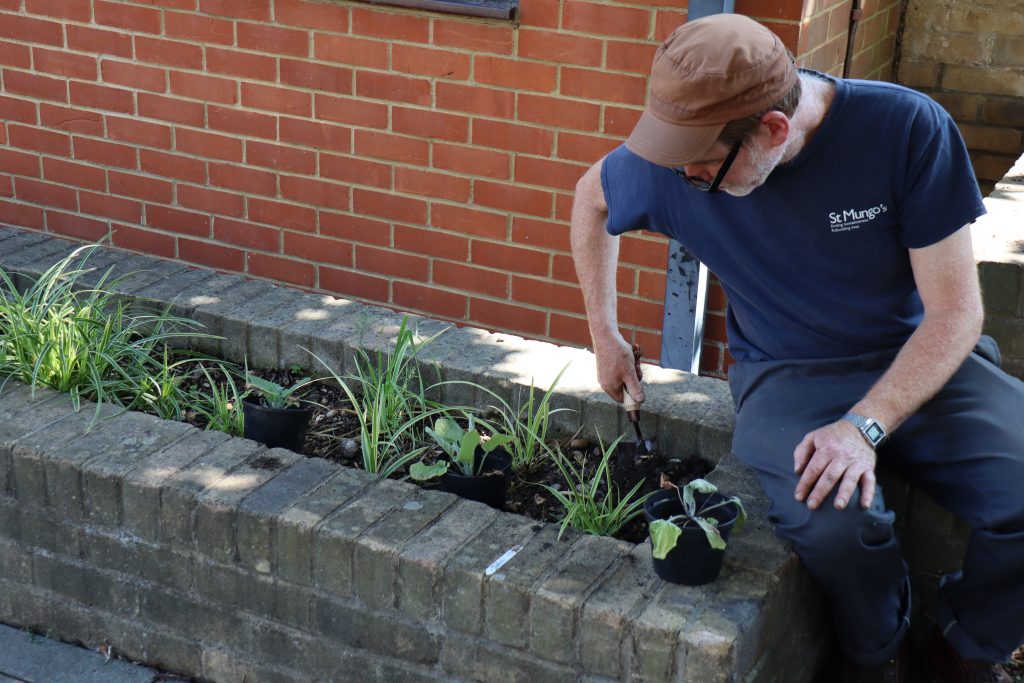
The Deposit Protection Service (The DPS) has facilitated a donation of over £1 million to St Mungo’s over the last year. The UK’s largest protector of rental deposits safeguards tenants’ deposits, and has enabled this vital funding by giving tenant customers the option to donate interest earned on their deposits directly to St Mungo’s. The donation comes at a critical moment. St Mungo’s supports over 26,000 people experiencing homelessness every single year, during a time when increasing numbers of people are faced with the harsh reality of losing their home. Rough sleeping in England reached record highs last autumn. According to the latest official figures, 4,793 people were estimated to be rough sleeping in England on a single night in autumn 2025, a rise of 3% since 2024. This is also the fourth successive rise in a row, with levels of rough sleeping in England now 171% higher than 2010 when records began. From helping the organisation’s Outreach teams to find and support those who are rough sleeping, to enabling the charity to offer specialist support and group activities for people recovering from homelessness, this donation will enable people to rebuild their life in the way that works for them. St Mungo’s gardening project Putting Down Roots is one of many different services that will benefit from this incredible donation. Putting Down Roots has sites in London and Bristol, and helps individuals recovering from homelessness to build confidence and skills through gardening. The service uses horticulture as a tool to help people on their recovery journey. Ray, a client of St Mungo’s who attended Putting Down Roots in Bristol, says: “My support worker from the charity who got me off the streets introduced me to St Mungo’s and Putting Down Roots. My social anxiety was so bad, I had to force myself out the door for the gardening sessions. But I’d turn up and listen to the adults! I’d ask for things to do – like planting flowers, sowing seeds and weeding. But it was a struggle to even bend down and pick things up at first. Putting Down Roots changed everything for me – I can’t speak highly enough of the sessions and team. It’s given me stability, and I had none of that before. My routine used to be going to the chemist for my prescriptions, coming home, having food and drink and falling asleep. But Putting Down Roots broke that chain. Of course, there are days when I think ‘I’m not sure I want to do it today.’ But I go to the allotment and feel much better for it. Because of St Mungo’s, I’ve got the confidence to grab my life back. My brain is still creating feel good chemicals, and I’ve learnt a lot of new skills. I love building planters and the process of potting seeds and seeing them blossom through summer. The same with eating home grown fruit and veg. I’m beginning to live the dream now!” Michael Reynolds, Director of Fundraising and Communications at St Mungo’s, says: “We are incredibly grateful to The DPS for the donations they have facilitated during the first year of our partnership and to all the tenants who have so generously chosen to donate the interest from their safeguarded deposits to St Mungo’s. With record numbers of people now facing or at risk of homelessness, our work has never been more urgent. The DPS’s fantastic £1 million fundraising milestone and continued support will make a real and lasting difference, helping people recover from homelessness and rebuild their lives.” Matt Trevett, Managing Director at The DPS, says: “We are delighted to reach the £1 million donation mark since embarking on this partnership. St Mungo’s delivers vital support to people facing some of the toughest circumstances across London and the South of England. Many of our employees are also supporting the charity directly, donating time and energy to a number of local St Mungo’s initiatives.” For more information on The DPS, visit www.depositprotection.com.
St Mungo’s longest-serving volunteer Jennifer Burnham awarded British Empire Medal in New Years Honours
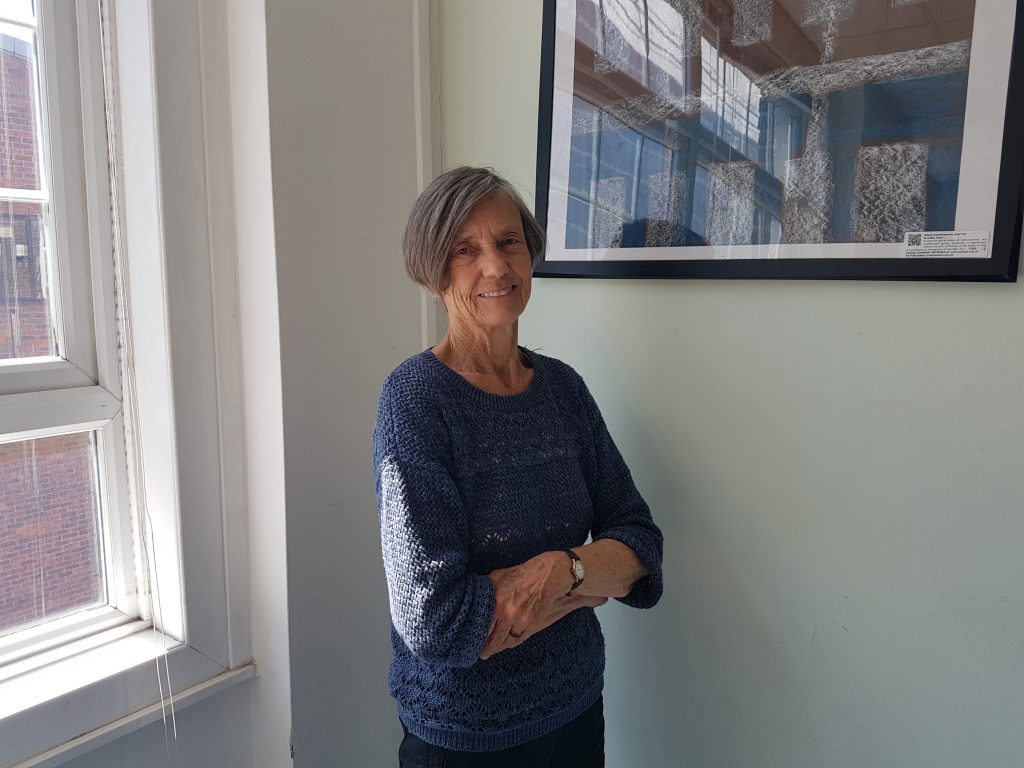
St Mungo’s longest-serving volunteer, Jennifer Burnham, has been awarded a British Empire Medal in the New Year’s Honours list. The award recognises her contribution to supporting people experiencing homelessness in accessing the creative arts. Burnham, 82, continues to volunteer for St Mungo’s and has made an enormous difference to hundreds of people’s lives over the course of almost 30 years of volunteering. She started volunteering for the homelessness charity in 1998, when she began leading an art and creative writing group in Kings Cross. The first groups took place at a St Mungo’s care home for men with significant histories of sleeping rough and using mental health services. The art groups have been credited with completely transforming the service, and Burnham created a brand new space for residents to learn new skills, explore creativity, and develop new ways of expression together. Alongside art groups, Burnham has also coordinated a number of other creative projects, including a programme of monthly visits to museums, galleries and other places of cultural interest. She also played a pivotal role in empowering people supported by St Mungo’s to take part in creative initiatives such as the month-long drawing festival The Big Draw. Burnham has also helped to coordinate client-led projects such as the Without Walls exhibition of art by people affected by homelessness, which took place at The Guardian News and Media Gallery in August 2012. Together with members of her art groups, Burnham also created a new, independent space for those with lived experience of homelessness to showcase their creative work – the long-running magazine Homeless Diamonds. Since 2006, the publication has offered a platform for artistic talent, and a voice for those with lived experience of homelessness. Published three times a year, the publication showcases writing and art by people associated with St Mungo’s – with every person who submits work having at least one piece featured. Reacting to the news of her BEM, Jennifer Burnham said: “Sharing the voices of the people St Mungo’s supports has been nothing but a pleasure and a privilege.” Iver Morgan, Head of Client Involvement and VASP (Volunteering, Apprenticeships, and Student Placements) at St Mungo’s said: “I am delighted to see Jen recognised in the New Year’s Honours. Her commitment to improving the lives of individuals experiencing homelessness over the last 28 years has been phenomenal. Despite her immense contribution to St Mungo’s, Jen is very modest, so I couldn’t be more pleased that she is being recognised more widely, in such a meaningful way, for changing the lives of so many through the creative arts.”
St Mungo’s patron Phil Spencer awarded MBE in New Years Honours

Phil Spencer has been made a Member of the Order of the British Empire in the New Years Honours, in recognition of charitable services and his work as a patron of St Mungo’s. The television presenter and journalist is a dedicated supporter of St Mungo’s, and became patron in 2010. Throughout the years, Phil has continued to support and engage with St Mungo’s work through visits and volunteering at various projects and services, and by supporting numerous events and fundraising activities. Phil Spencer is a renowned presenter, author, businessman, and property investor. As the co-presenter of the long-running Channel 4 series Location, Location, Location, he has become one of the most recognisable faces on British television and is widely regarded as an expert in all things property-related. Emma Haddad, chief executive of St Mungo’s said: “We’d like to congratulate Phil Spencer for this most amazing achievement. He’s been a St Mungo’s patron since 2010 and within that time, he’s shown incredible passion and dedication. “Throughout the years, Phil has continued to support and engage with St Mungo’s work through visits and volunteering at various projects and services, and by supporting numerous events and fundraising activities which have people affected by homelessness at their heart. “Homelessness is unfortunately still such a stigmatised issue; recent research from St Mungo’s shows that many people are still unaware of the causes of homelessness and how they can help. “Having such a recognisable figure as Phil Spencer supporting us in getting the message out there – that we can end homelessness for good – is integral to our work. “We’re looking forward to continuing to work with Phil over 2026 and beyond, so that we can achieve more great things for people affected by homelessness.”
Volunteers help St Mungo’s to wrap over 300 Christmas gifts for people experiencing homelessness in Bristol
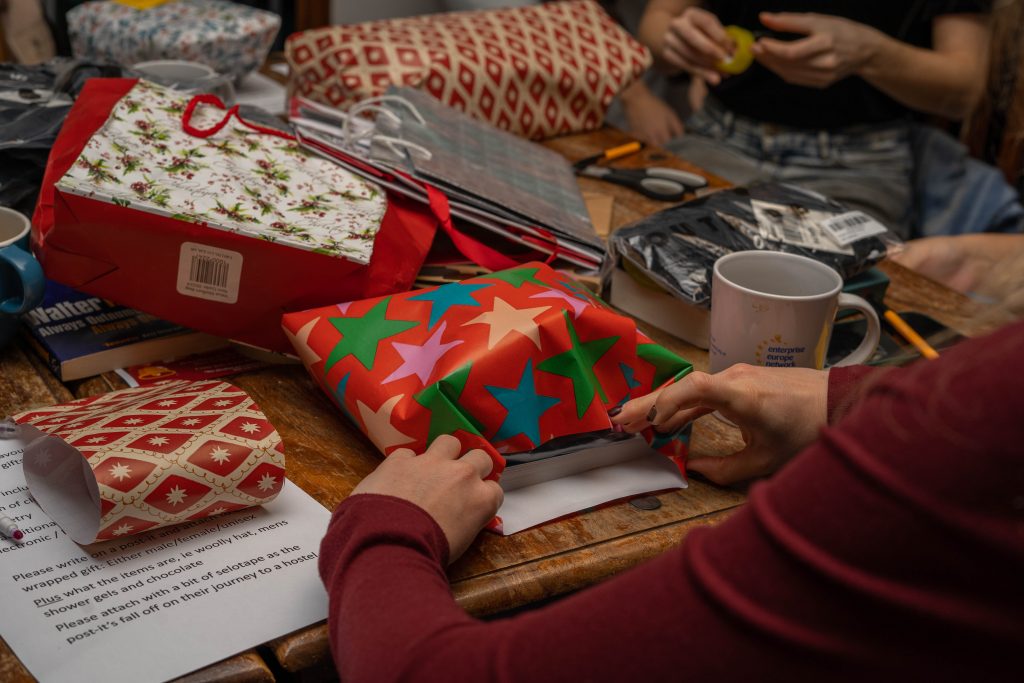
As Christmas approaches, leading homelessness charity St Mungo’s has hosted a festive wrapping day at one of their Bristol services. With the help of 36 volunteers, around 340 presents were wrapped by volunteers on November 28th, before being distributed to people experiencing homelessness in Bristol who are supported by the charity. The Lord Mayor of Bristol, Councillor Henry Michallat also joined volunteers and staff to help raise further awareness of the challenges faced by people experiencing homelessness in Bristol. Thanks to the generosity of local businesses, a wide range of gifts were donated and wrapped. These will be shared with people supported through St Mungo’s services in Bristol — from those sleeping rough to individuals now living in supported accommodation or specialist housing. All donations were guided by a list of useful items compiled by St Mungo’s frontline teams, ensuring gifts meet the needs of people experiencing homelessness. Presents included warm clothing such as hats and gloves, bathroom toiletries and gifts such as books, crafts, chocolates, and other snacks, all donated by local businesses and supporters. Volunteers included staff from The Deposit Protection Scheme (DPS), Baker Hughes, HTC, Bristol City Leap, Vattenfall, Turner and Townsend, S&W Group, Colliers, Burges Salmon, Ashfords, and Goram Homes. St Mungo’s Bristol-based teams provide vital services in the city including street outreach, rough sleeping prevention, and specialist supported housing, helping people rebuild their lives and move away from homelessness for good. Alex Henden, Community and Events Manager at St Mungo’s said: “As Christmas approaches and temperatures drop, life becomes even harder for people sleeping rough in Bristol. The festive season can also be a challenging time for many of those we support, particularly for people who have complex family relationships or have experienced bereavement. We hope these gifts serve as a small reminder that they are not alone, and that support is always available. We’re incredibly grateful to our volunteers for giving their time today and helping us wrap and distribute more than 340 presents across Bristol. This also wouldn’t have been possible without the generosity of local businesses who kindly donated gifts, and we truly appreciate their support.” The Lord Mayor of Bristol, Councillor Henry Michallat said: “As Lord Mayor, I am proud to support St Mungo’s and their vital work to combat homelessness right across Bristol, especially at Christmas, when compassion and community matter most.” Matt Trevett, Managing Director at The Deposit Protection Service (The DPS), a St Mungo’s charity partner, said: “We are delighted to support St Mungo’s in helping those experiencing or recovering from homelessness, especially at this time of year. The charity’s outreach to people in the most vulnerable of circumstances resonates strongly with our employees, many of whom live in the city, and a number of whom are here today. We are proud to support St Mungo’s year-round goal to address the immediate and longer-term causes of homelessness.” The DPS is based in Bristol, where St Mungo’s also operates. In addition to Bristol, the homelessness charity also runs services in London, Reading, Oxford, Bournemouth Christchurch and Poole, and Brighton.
St Mungo’s launches cold-activated ‘Orange Warnings’ to protect people rough sleeping this winter
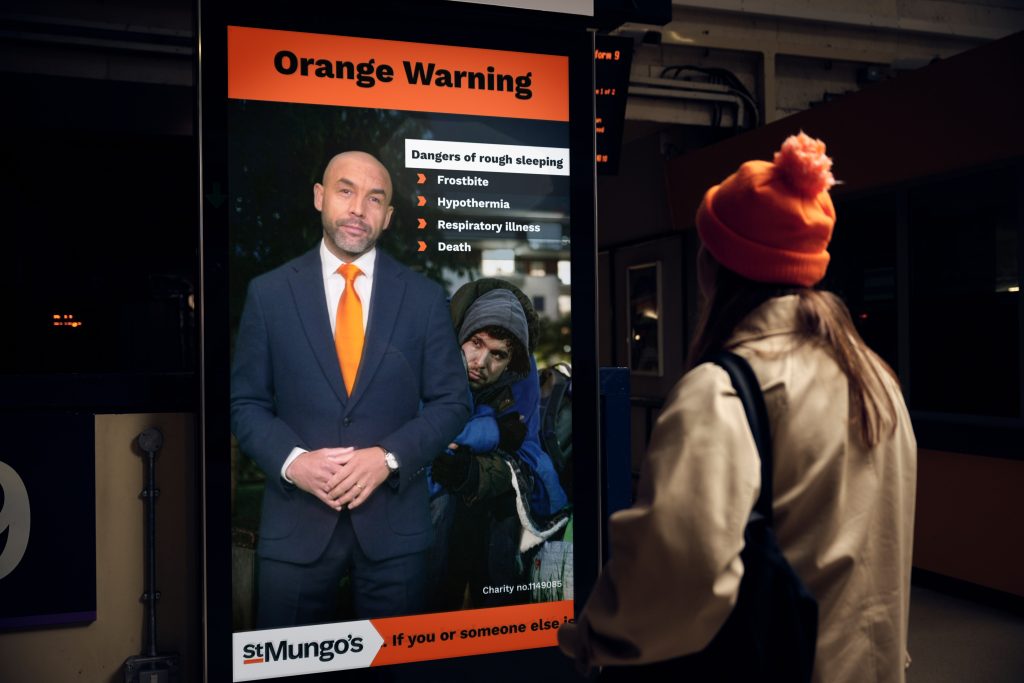
New cold-activated warnings will launch across London as temperatures hit near freezing, advising people of the dangers of sleeping rough and helping them find safety and warmth. The ‘Orange Warnings’, from homelessness charity St Mungo’s, fronted by weather presenter Alex Beresford, will be triggered when the temperature drops to below 6°C and is deemed a risk to life. The Orange Warnings acknowledge that anything below 6°C could result in severe harm or death. Last year the UK hit 6 degrees or below 161 days across the year, with 87 per cent of this during the winter, putting those facing nights on the street at risk. The warnings will play out on train stations across the city – as people sleeping rough tend to gravitate towards the commuter hubs as they offer basic facilities and protection from the weather – and highlight the dangers of cold temperatures for people sleeping on the streets and how to seek support. Last winter, nearly half (43 per cent) of the people St Mungo’s Outreach teams assessed had physical health needs including respiratory illnesses, hypothermia, and frostbite. St Mungo’s reports that winter traditionally sees the highest proportion of people they support requiring emergency assistance; this can be as a direct result of these physical health needs. Cold weather can intensify health risks such as hypothermia, frostbite and respiratory viruses, and place additional pressure on health and social care services. Current projections suggest that deaths linked to extreme cold will peak around 2030, while deaths associated with moderate cold are expected to reach their highest levels in the 2050s. St Mungo’s ‘Orange Warnings’ launch in response to a third (33 per cent) of the nation not knowing how to support people experiencing homelessness, with only 3 per cent of Brits making a referral to StreetLink to help someone who is experiencing homelessness. With nearly half of Brits (40 per cent) not donating or providing support for people experiencing homelessness in the last year, the need for donations is greater than ever. By launching the ‘Orange Warning’, St Mungo’s aims to raise public awareness of the homelessness crisis during the difficult (and potentially life-threatening) cold winter months and encourage donations to help St Mungo’s continue its lifesaving work through its frontline teams. The activation comes at a critical time as the number of people estimated to be sleeping rough on a single night in autumn rose to 4,667 last year. This has risen for the third year in a row, increasing 20 per cent from the year prior with nearly half (45 per cent) of the people being in London and the South East. The largest regional increase was in London, rising from 1,132 in 2023 to 1,318 in 2024 – a 16 per cent increase (186 people). As the nights draw in and the risks of cold-weather related illness and violence increase from the longer nights, St Mungo’s frontline teams are out on the streets as the first responders every day and night, working around the clock to reach people in urgent need of safety, warmth and emergency shelter, as well as helping them to rebuild their lives for the long-term through counselling, employment services and skills courses. Lee, who was supported by St Mungo’s comments: “After spending nearly thirty years drifting on and off the streets, I know all too well what winter rough sleeping is like. Some mornings I woke up covered in snow, other nights I slept in a graveyard where squirrels chewed through my sleeping bag for nesting material. It was a brutal existence, and I’d begun to believe it was all my life would ever be. Everything changed in 2016 when I met a St Mungo’s Outreach worker who helped me build a routine, gain confidence and take new courses which helped me to get off the streets. I hope that by sharing my story, people can better understand how tough winter rough sleeping is, and how with the right support everything can change.” Alex Beresford, ITV Weather Presenter comments: “I’m proud to support St Mungo’s Orange Warning initiative this winter. Freezing temperatures can be incredibly dangerous for anyone sleeping on the streets, so being part of the alert felt like a meaningful way to help raise awareness and encourage?people to support. St Mungo’s frontline teams are out every day and night helping people stay safe, and if you spot the Orange Warning this winter, I’d encourage you to pause, think of those facing the cold and visit St Mungo’s website to see how you can help.” Emma Haddad, CEO at St Mungo’s comments: “The winter months can be brutal for people sleeping rough; our frontline teams can find people needing medical treatment including for hypothermia, pneumonia, and frostbite. We hope our Orange Warnings will shine a light on the harsh reality of winter on the streets and the support options available. With the public’s support, we can continue to help people find safety, warmth, and a place they can finally call their own – now is the time to respond.” Key locations of Orange Warnings: Victoria Kings Cross Waterloo Charing Cross Euston London Bridge
St Mungo’s challenges misconceptions around the causes of homelessness

A new survey conducted by the homelessness charity St Mungo’s reveals that there may be harmful misconceptions around the leading causes of homelessness in the UK. Participants were shown a list of 19 possible causes of homelessness in a multiple-choice question. Reviewing some of the answers given provides interesting insight: The charity’s polling suggests that some people believe homelessness may be a personal choice, with almost a fifth (18%) selecting this as one of the main causes of homelessness. 64% of respondents believe that one of the main causes of homelessness is alcohol or drug issues. Half (50%) of respondents selected poverty, and the same proportion selected lack of affordable housing to rent or buy as one of the main causes of homelessness. Just 18% identified a lack of support for migrants as one of the main causes of homelessness In response, the charity is here to challenge these misconceptions. It cautions that homelessness is a complex issue caused by multiple factors, and is never a personal choice. Ish Camp, Regional Head at St Mungo’s, said: ‘Misconceptions, such as homelessness being a personal choice, are incredibly harmful. They contribute to stigma and shame, which can stop people from accessing support, leaving people vulnerable to serious harm and even death.” “There are numerous, personal, and systemic reasons which contribute to why people may become homeless,” says Ish Camp. “This is what makes resolving the problem such a challenge as there is not one single solution that works for everyone. Every human being is different, and approaches need to be tailored to work for individuals if we want to resolve this complex issue.” “St Mungo’s is here to challenge misconceptions and stereotypes around homelessness,” Ish Camp says. “Our teams get to know clients as individuals, understanding their unique needs to help as many people as possible into safe and warm accommodation, where they can begin rebuilding their lives in the way they want to.” While evidence shows that mental health issues and alcohol and substance support needs are more common among people experiencing homelessness, St Mungo’s warns that this is a consequence of homelessness rather than a cause. In reality, complex support needs frequently arise or exacerbate as a direct result of somebody losing their home, rather than being a sole cause of homelessness. The rising cost of living, a lack of affordable housing, relationship breakdown, the death of a friend, partner or relative, low wages and unemployment, a lack of support for newly-recognised asylum seekers leaving Home Office accommodation, and domestic and other abuse are also factors that may contribute to a person becoming homeless. Based on the same polling where participants were shown a list of 19 possible causes of homelessness in a multiple-choice question, St Mungo’s believes there is a relative lack of awareness around these nuances. 44% of those polled by St Mungo’s identified relationship breakdown as a significant factor, selecting it as an answer among main causes 39% selected domestic or other abuse as one of the main causes of homelessness 18% selected bereavement as one of the main causes of homelessness 36% of respondents chose low wages and the same proportion chose lack of support for people leaving the armed forces as one of the main causes of homelessness 46% cited unemployment as a main cause of homelessness. Visit mungos.org to find out more about the roles of the charity’s frontline workers.
St Mungo’s charity partner The DPS facilitates donations of over £500,000 to organisation’s work supporting people experiencing homelessness
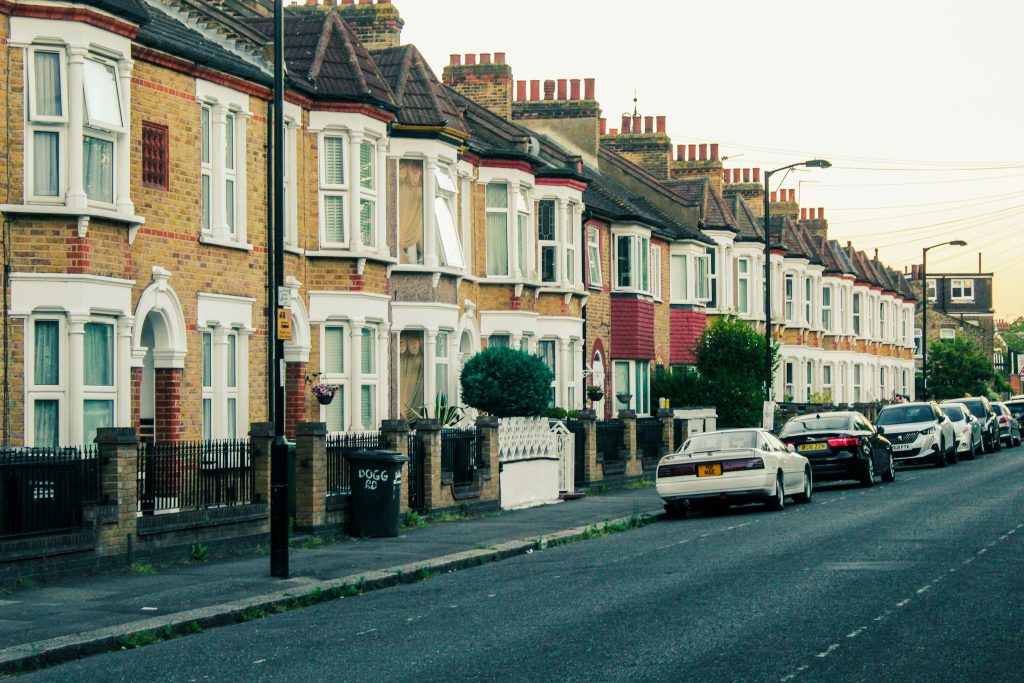
St Mungo’s charity partner, The Deposit Protection Service (The DPS), has facilitated the donation of over £500,000 to the organisation. The UK’s largest protector of rental deposits is enabling the transfer to the charity as part of its long-standing commitment to organisations working to combat homelessness. The donations arise from deposit interest whilst tenants’ rental deposits are safeguarded by The DPS. At the end of the tenancy, tenants may choose to donate the interest to St Mungo’s. Laura Herring, Director of Fundraising and Communications, St Mungo’s, said: “We are incredibly grateful to The DPS for choosing to support St Mungo’s. “The donation of an incredible £500,000-plus through this partnership will go a long way to helping those in significant housing need. “With a record number of people experiencing homelessness, we look forward to continuing to work together to support people without somewhere safe, warm and stable to stay and help them rebuild their lives.” Matt Trevett, Managing Director at The DPS, said: “We’re delighted to partner with an organisation that works tirelessly to prevent homelessness around the UK. “The vital work St Mungo’s undertakes supporting people to recover from homelessness and advocating for change is why we chose to support them. “The donation is only possible due to the generosity of tenants that have chosen to support the initiative and the significant volume of deposits managed and maintained by The DPS.” Last year, St Mungo’s supported almost 25,000 people across 138 services – and supported over 2,100 people experiencing homelessness on any given night.
St Mungo’s issues advice on how to support people rough sleeping during hot weather
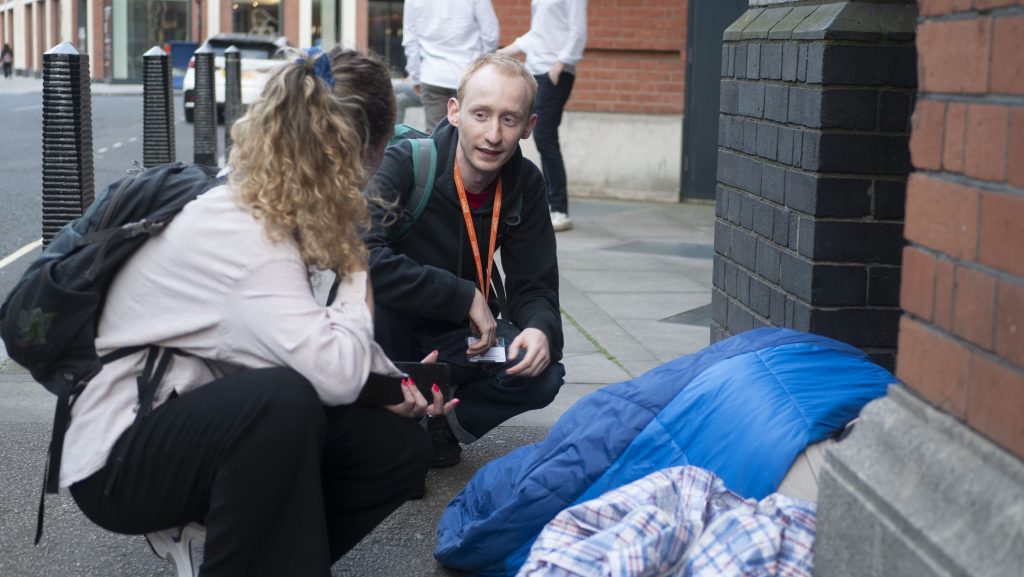
With rising temperatures across many parts of the UK, leading homelessness charity St Mungo’s has issued new advice on how people can best support those who are rough sleeping during dangerously hot weather. “Soaring temperatures can be deadly for those who are sleeping rough,” says James Lally, Director of Pan and Central London and Street Homeless Services at St Mungo’s. “On the streets, it can be difficult to access water, sunscreen, and places to shelter from the sun, meaning that those experiencing homelessness have a particularly high risk of developing life-threatening heat-related illnesses such as heat exhaustion, dehydration, or heat stroke.” If you would like to help people sleeping rough on the streets, the charity advises that there are several ways that you can offer support to people experiencing homelessness during hot weather: Contact Streetlink to connect people rough sleeping with local support Offer sun cream: sun cream can often be quite costly, meaning that it may be inaccessible to people experiencing homelessness Offer water: it can be difficult to access clean, cold water on the streets Offer protective clothing such as sunglasses, hats, light scarves, and light, loose-fitting cotton clothes In a medical emergency, or when somebody is in immediate danger, always call 999. During this time, St Mungo’s will be taking additional steps to protect and advise people who are currently sleeping rough, providing sunscreen, protective clothing and water to anyone on the streets, as well as providing advice around how to stay safe and well during the hotter weather. Last year, St Mungo’s supported almost 25,000 people across 138 services – and supported over 2,100 people experiencing homelessness on any given night. The charity runs services in London, Bournemouth, Christchurch and Poole, Brighton, Bristol, Leicester, Oxford and Reading. “As ever, St Mungo’s teams are prepared to respond to this critical situation,” says James Lally. “We will continue to work tirelessly, with the support of local authorities, to ensure people sleeping rough have access to water, shelter, and sun cream. We will also increase the number of Outreach shifts taking place during this time.”


