“Our Women’s Strategy is about making sure every woman who comes to us feels safe, seen and supported. It’s grounded in lived experience and driven by a commitment to deliver services that truly work for women.”
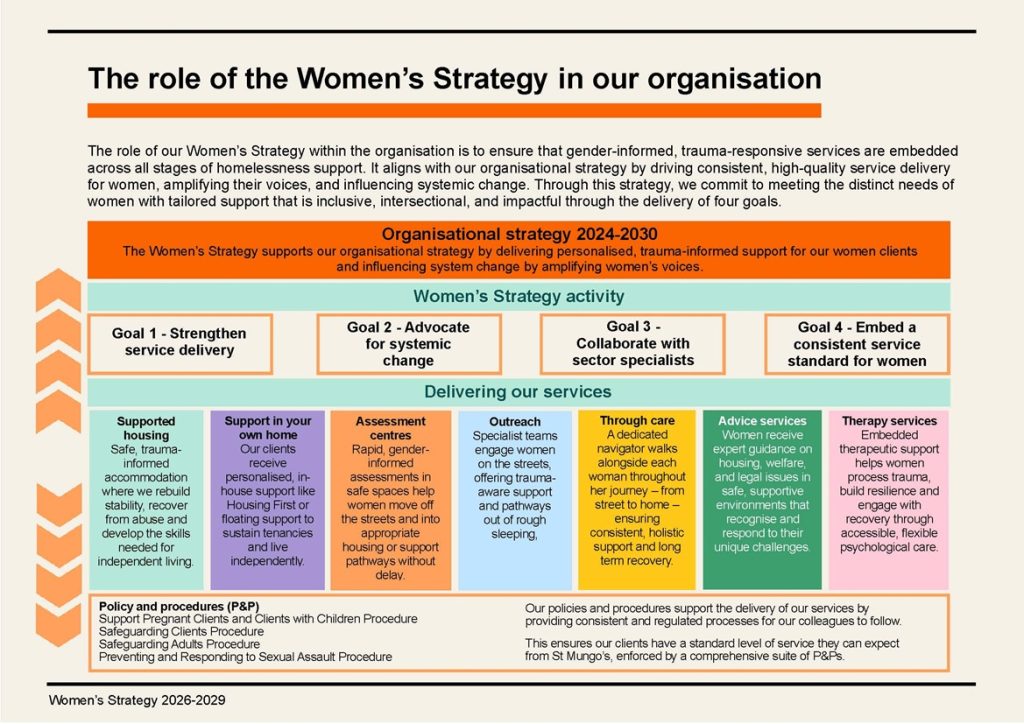
At St Mungo’s, we’re proud of our Women’s Strategy, designed to better support women experiencing homelessness. This strategy builds on the foundations of our previous work and reflects the voices of the women we support and the colleagues who walk alongside them.
Women’s experiences of homelessness are often shaped by trauma and hidden from view. They may be less visible in traditional homelessness services, and more likely to face barriers to accessing support. Our strategy aims to change that.
Why this strategy matters
Women experiencing homelessness face unique challenges. They are more likely to experience hidden homelessness, and their journeys are often shaped by domestic abuse, trauma, and systemic inequality. We believe every woman deserves to feel physically and psychologically safe, and to be supported in achieving meaningful outcomes.
This strategy is our commitment to making that a reality.
We’ve listened closely to the voices of our clients and colleagues. Their insights have shaped this strategy from the ground up. Through consultation, feedback, and shared experiences, we’ve created a strategy that reflects real needs and aspirations.
We’ve also committed to improving how we collect and use data, securing funding, and influencing policy to ensure women’s homelessness is better understood and addressed to ensure our women clients get the best.