
St Mungo’s Chief People Officer Kerry McCafferty recognised with MBE in the King’s Birthday Honours
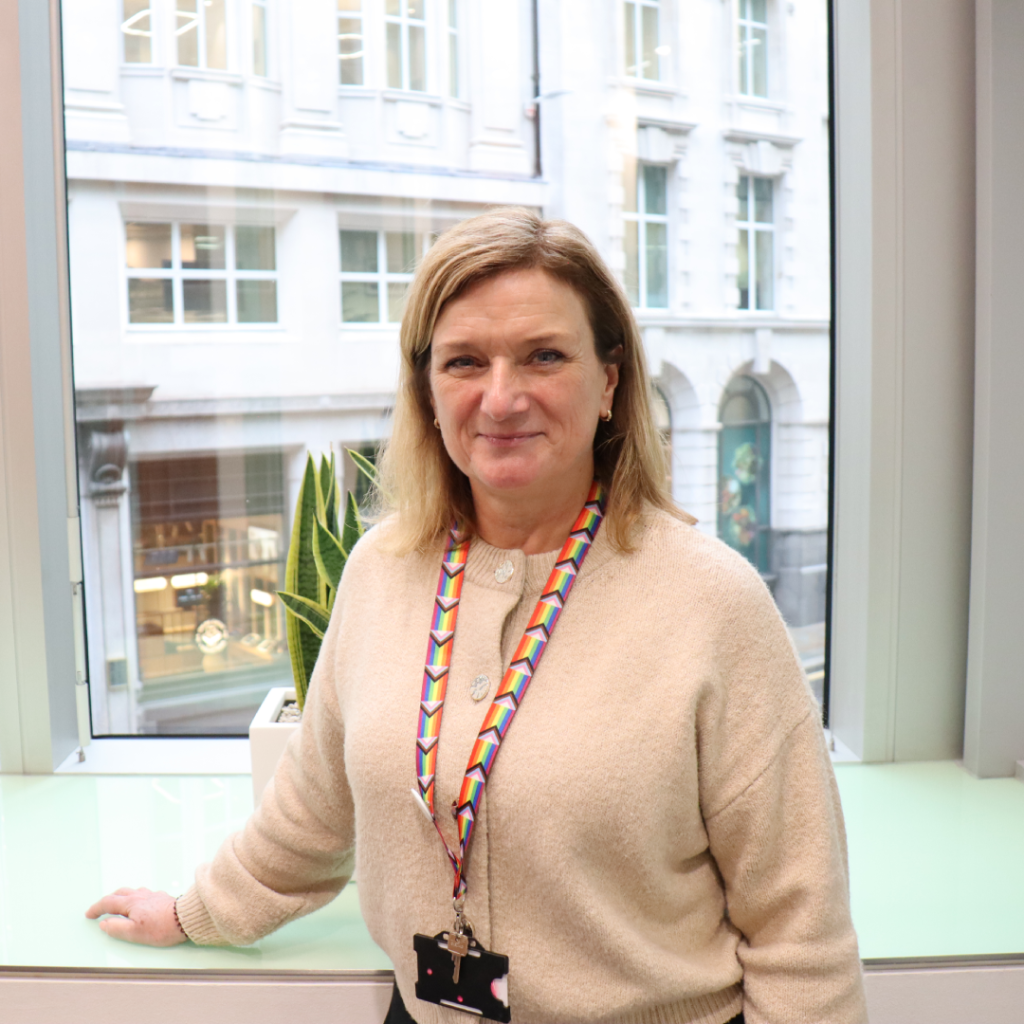
St Mungo’s Chief People Officer Kerry McCafferty has been awarded an MBE in the King’s Birthday Honours list. The award recognises Kerry’s incredible contribution to people leadership and colleague wellbeing over the last 35 years, most recently at St Mungo’s where she champions colleague engagement and inclusion for more than 2,000 colleagues and volunteers. Since joining St Mungo’s in November 2022, Kerry has led the development of a new People and Culture Strategy, which reflects the charity’s commitment to ensuring that every colleague feels valued, empowered and connected to the organisation’s central purpose of ending homelessness and rebuilding lives. During her tenure, Kerry has spearheaded several initiatives to create an inclusive, engaging and supportive workplace culture. Earlier this year, St Mungo’s was recognised as a Trailblazer organisation by Stonewall, which placed the organisation firmly among the UK’s leading organisations for LGBTQIA+ inclusion. More recently, an innovative programme that Kerry has co-developed to support Global Majority colleagues to develop their careers was Highly Commended in the 2026 Homeless Link Excellence Awards as an outstanding workforce development scheme. As a champion for workplace inclusion and wellbeing, Kerry is also a senior sponsor for the St Mungo’s Women’s Action Network and chairs the organisation’s Anti-Racist Action Plan steering group. With a career in human resources which spans more than 35 years, Kerry also spent more than a decade leading People Teams for organisations including the British Transport Police and Buckinghamshire and Milton Keynes Fire and Rescue Service. Reacting to the news of her MBE, Kerry McCafferty said: “I am honestly blown away by this honour. Every day, I see the commitment and significant impact made by colleagues across St Mungo’s as they support people experiencing homelessness to rebuild their lives. I’m incredibly proud to be a part of St Mungo’s and I love working in the People profession. In recent years, we have implemented many positive cultural changes and workplace initiatives to improve working life, and to build an empowering culture where colleagues feel motivated and supported to thrive. I hope to see these changes continue and I share this honour with everyone across St Mungo’s.” Emma Haddad, Chief Executive of St Mungo’s, said: “I am thrilled to see Kerry recognised in the King’s Birthday Honours for her immense contribution to our workplace culture. Kerry’s commitment to driving colleague engagement and embedding equity, diversity and inclusion across St Mungo’s is tangible. We are committed to delivering the best possible services for those we support out of homelessness, and making St Mungo’s an ever greater place to work directly impacts the people we support. This honour is so well deserved.”
Her Majesty The Queen visits St Mungo’s in support of vital new literary project
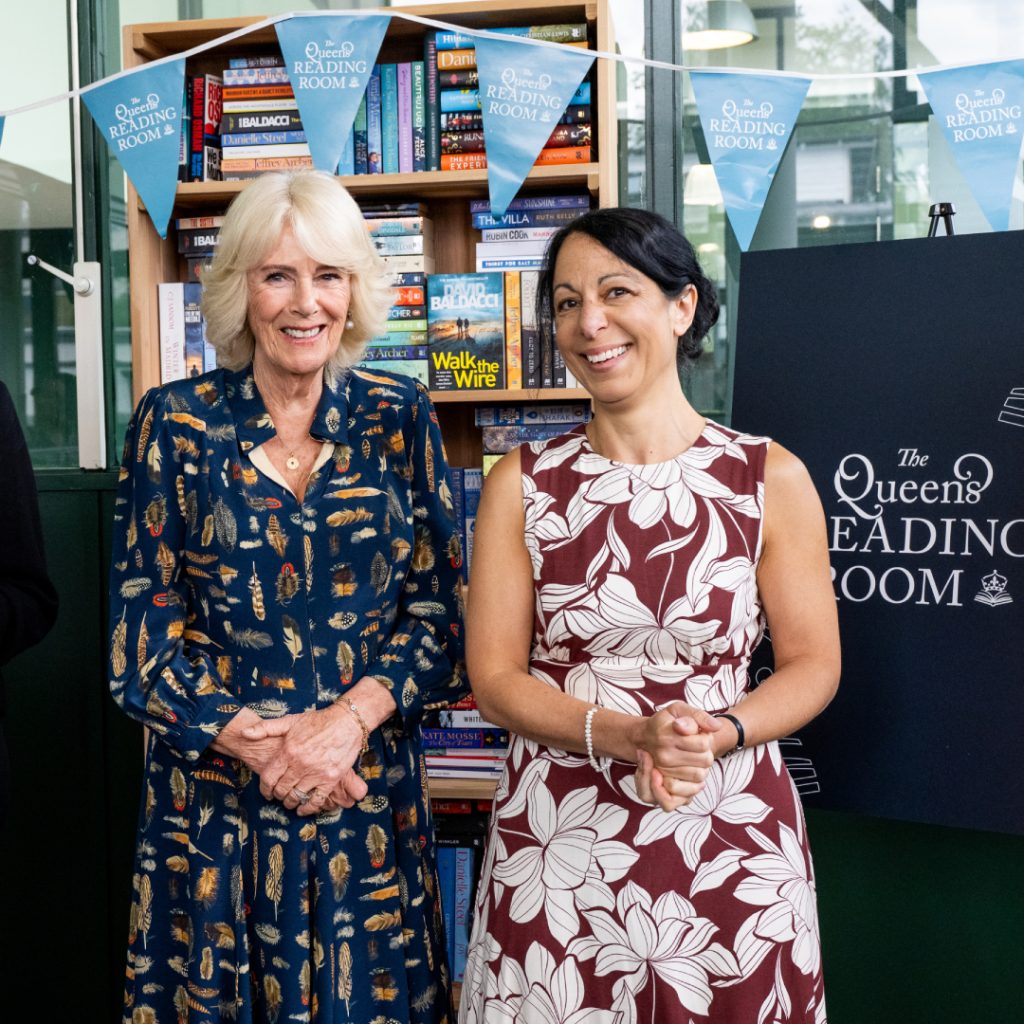
On Wednesday 10th June, Her Majesty Queen Camilla visited one of St Mungo’s accommodation services in South London to meet the people involved in a vital new project, which explores how reading can support the wellbeing and recovery of people experiencing homelessness. The event, also attended by author Elif Shafak, allowed Her Majesty to meet some of the brilliant minds behind the project, including St Mungo’s colleagues who have been running new reading programmes in their services, as well as a number of people supported by St Mungo’s who have been taking part in the programme. Over the past eighteen months, The Queen’s Reading Room has been proud to partner with St Mungo’s to pilot the ‘Make Room For Reading’ toolkit and support reading activity across a number of St Mungo’s services. With the support of Pan Macmillan Publishing, it has also donated hundreds of books to fill each of ‘The Queen’s Reading Room Shelves’ in nine London-based St Mungo’s accommodation services, with bespoke bookshelves designed by Royal Warrant Holder Woodpecker Joinery helping to create spaces where people can read independently or together. The donated books were selected by frontline colleagues and people supported by St Mungo’s, using a bespoke ‘Book Menu’ to give people a voice in the donation process. Milena has been supported by St Mungo’s since 2019 and has benefited from the partnership with The Queen’s Reading Room: “When the first books from The Queen’s Reading Room arrived at my St Mungo’s accommodation, I was really thrilled. Reading has always been a passion of mine since I was a child. I can spend hours reading history books in particular as they help me relate to people and understand my place in the world more.” Speaking at the event, St Mungo’s CEO Emma Haddad, said: “We are honoured to have welcomed Her Majesty The Queen to St Mungo’s today, and privileged to have been able to introduce her to people whose recovery from homelessness has been positively impacted by books and reading. Her Majesty’s longstanding commitment to championing the transformative power of reading is hugely inspiring and aligns with St Mungo’s work to support people to end their homelessness for good.” Highlights of the event and more information on the partnership will be shared across St Mungo’s socials throughout the coming days.
Celebrating Volunteers’ Week 2026
Every year, Volunteer’s Week acts as a useful reminder of the power of volunteers. St Mungo’s was started by volunteers. In 1969, a group of people decided to do something to help people sleeping rough outside Charing Cross station in London. Today, volunteering at St Mungo’s is still going strong; from supporting our outreach teams, to teaching art classes, our volunteers are vital in helping people to recover from homelessness. This Volunteers’ Week, which runs from 1 to 7 June, we want to say, once again, a huge thank you to our 560 volunteers by bringing the change they make into the spotlight. What our volunteers do St Mungo’s volunteers contribute across an exceptionally wide range of roles, reflecting the breadth of our services’ types and our clients’ needs. In frontline positions within Outreach, First Response, StreetLink, and Housing First services, volunteers directly support people to move away from homelessness. In our peer-led and lived experience roles like Client Ambassadors, Move On Peer Volunteers, and Advisory Board members, volunteers offer their expertise to help shape recovery journeys and St Mungo’s strategic direction. A smaller chunk of our volunteers regularly offer their skills and expertise in digital/ tech, wellbeing and office roles helping us strengthen organisational capacity and ensure our services stay accessible and responsive. Through leading art groups, cooking sessions, gardening, yoga and music groups, volunteers also help us create safe, welcoming spaces where clients can re-build confidence and improve their wellbeing. Our most recent offer, microvolunteering, further expands volunteers’ impact through bitesize contributions like translation, photography, and event support exactly when needed the most. So, you can see why we are grateful to our volunteers. They not only enhance our service delivery but also create a sense of belonging and empowerment that matches our service ethos. Plenty of volunteering testimonials give a taste of how volunteering feels across our organisation: On his duties as a microvolunteer translator, Saeid said “I helped translating a St. Mungo’s announcement letter to Farsi. The main goal for me was that every bit and piece of that letter to look like a genuine Farsi letter, not just some poor computer translation. Using a proper Farsi font, correct alignment, and conveying words that lack direct equivalents naturally. Attention to detail matters a lot, because even a simple letter can give a feeling of assurance to the client; making them feel deep down that ‘These St. Mungo’s people must know their stuff! I am in good hands’” First Response volunteer, Ed, said “I finish a shift knowing I’ve helped, even in a small way. But if we don’t find anyone, we’ve still given St Mungo’s frontline team more time to focus on helping others. We’re all connecting with the community and supporting people through some really tough times, and hopefully helping them to leave homelessness behind for good.” Creative writing volunteer, Neil, said “We give clients a chance to be vulnerable in sharing their thoughts and experiences. Some just want a chat, but whichever reason they come along for, they notice you’re there for them and we’re pleased to see each other.” Celebrating our volunteers This year, as every year, during Volunteers’ Week we’ll be holding some local events to say thank you to them in-person and give our annual Volunteer Awards for 11 years running. We’ll be sharing more from our celebrations across our social media channels throughout the week too so we can say a big thank you in small ways. Get involved If you’re thinking about volunteering, we’d love to hear from you. We have a wide range of roles with new opportunities added on a weekly basis, whatever your background, skills or availability is, we’re confident that there’ll be something for you! To those considering roles at St Mungo’s, hub volunteer Jocelyn said “Just do it. Take the chance. It always pays dividends. St Mungo’s is doing an incredible job, and I hope to return to support them again soon.” See our current volunteering opportunities Happy Volunteers’ Week to all St. Mungo’s volunteers and to everyone else who is making our world a better place through volunteering!
Navigating Vulnerability: Mental Health, Risk and Homelessness | St Mungo’s 2026 Panel
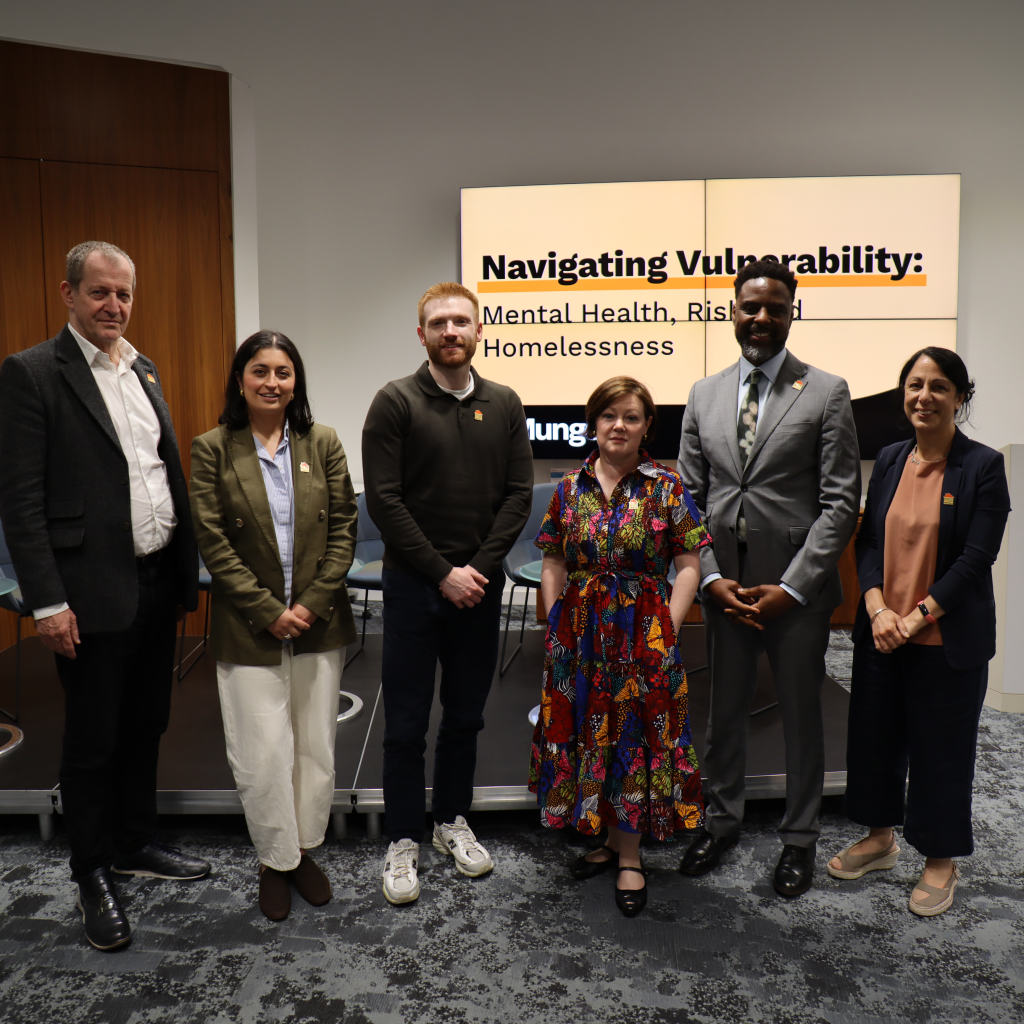
At St Mungo’s, we have long understood the link between homelessness and mental health, and that one of the most significant barriers our clients face in moving on with their lives is past and sometimes recurring trauma. Yesterday (21 May), we ran a panel event entitled Navigating Vulnerability: Mental Health, Risk and Homelessness, chaired by the acclaimed journalist and mental health campaigner Alastair Campbell, introduced by St Mungo’s CEO, Emma Haddad and hosted by our partners at Cushman & Wakefield. The panel included: Kathleen Dolby, Regional Head for North London and Care Services at St Mungo’s; Danny Beales, Labour MP for Uxbridge and South Ruislip; Dee O’Connell, Director of Policy and Programmes, Pathway; and Chris Dzikiti, Interim Chief Inspector of Mental Health at the Care Quality Commission. The discussion explored how mental health challenges can increase vulnerability to homelessness, and how the experience itself can intensify mental health needs. The panel also discussed where earlier action can reduce harm, and the necessity of sustained mental health support for people experiencing homelessness. Journalist and mental health campaigner, Alastair Campbell, said: “Right now we really do need to talk about [the connection between mental health and homelessness] because I think it’s an issue that demands attention and it’s also an issue that resists easy answers.” St Mungo’s CEO, Emma Haddad, said: “At St Mungo’s, we see on a daily basis the interconnection between homelessness and mental health specifically. They are mutually reinforcing and often reinforce a downward spiral when the two interconnect.” Regional Head for North London and Care Services at St Mungo’s, Kathleen Dolby, said: “Recognising that a trauma-informed approach and getting people off to the best start after a step back is crucial.” Interim Chief Inspector of Mental Health at the Care Quality Commission, Chris Dzikiti, said: “Working together as a system and integrating services, [that is when] you’ll most likely make a big difference in people’s lives.” Director of Policy and Programmes at Pathway, Dee O’Connell, said: “Wrapping holistic support around a person in a way that meets them where they are and makes it easy for them to access and provides everything they need in a seamless way, is the thing that we know makes a difference.” Labour MP for Uxbridge and South Ruislip, Danny Beales, said: “What we need locally is the public, private, and the voluntary sector to work together to solve homelessness and mental health issues.” The reality is that mental health is both a driver and a consequence of homelessness. Policy and practice must respond to this two way relationship, including where prevention and early intervention can reduce harm. We would like to offer our sincere thanks to Alastair Campbell, Kathleen Dolby, Danny Beales MP, Dee O’Connell and Chris Dzitkiti for their insights, and to Cushman & Wakefield for welcoming us to their London offices once again.
Celebrating Microvolunteering at St Mungo’s

Today (15 April) marks International Microvolunteering Day and we’re celebrating and thanking all of the microvolunteers at St Mungo’s! Maria Dimouli, Volunteering, Apprenticeships and Involvement Manager, said: “We’re proud to have welcomed over 180 microvolunteers into St Mungo’s. They are proof that compassion can be shared in minutes, and that those minutes can be a meaningful way to give back. From translating documents and providing real time interpretation of discussions with clients (along with background cultural insight) to capturing events and case studies through photography and videography and supporting with our Tenant Satisfaction survey, changing lives can be achieved one task at a time. Anyone can be a microvolunteer: a member of the public who will offer us their expertise and connect us more to the local community; our clients who may be speaking a language we don’t and of course, our staff who may want to give back outside their job remit.” Our microvolunteers have been supporting St Mungo’s in all sorts of ways. Alex Henden, Community and Events Manager, said: “We had a microvolunteer who joined us at the Royal Parks Half Marathon as our photographer. Without her joining us, we wouldn’t have any images of our runners in our new branding after the event, and to use to promote future events. Microvolunteering allows someone to be able to use their skillset to benefit St Mungo’s. We don’t need a photographer full time, but having a number of people who we could reach out to gives our team much more capacity in that moment to concentrate on other areas of their role.” Microvolunteering has also become a meaningful way for our clients to give back too. Saeid, former St Mungo’s client, said: “I helped with translating a St Mungo’s official letter to Farsi. The main goal for me was for every bit and piece of that letter to look like a genuine Farsi letter, not just another computer translation. Using a proper Farsi font, correct alignment, and conveying words that lack direct equivalents naturally. Attention to detail matters a lot, because even a simple letter can give a feeling of assurance to the client, making them feel deep down that ‘St. Mungo’s must know their stuff! I am in good hands.’ ” To every microvolunteer who has translated a document, taken a photo, supported an event and offered their expertise and time, thank you! Your contributions may be bite sized, but your impact is anything but. To find out more about our current volunteering opportunities, click here.
St Mungo’s recognised as Stonewall Trailblazer
St Mungo’s are delighted to have been accredited by Stonewall as a Trailblazer organisation. With an exceptional score placing us firmly among the UK’s leading organisations for LGBTQIA+ inclusion, this is the highest level possible in Stonewall’s new Proud Employers Accreditation scheme. The achievement is especially meaningful because Stonewall’s approach to assessing organisations has changed. The new framework doesn’t just reward written policies, but looks for evidence of real, lived inclusion across an organisation. The results reflect a workplace where colleagues feel seen, valued and supported, and where inclusion is increasingly part of our everyday culture. What Stonewall said about St Mungo’s Stonewall describes Trailblazer organisations as those demonstrating “leadership at its finest” and which are “at the forefront of change”, with exceptional commitment and results that inspire others. Stonewall’s detailed feedback highlighted several strengths across St Mungo’s, including strong and authentic LGBTQIA+ leadership, inclusive recruitment, policies shaped by lived experience, and more. Reflecting on our Trailblazer accreditation, St Mungo’s CEO Emma Haddad said: “This accreditation is remarkable, and places St Mungo’s at the forefront of LGBTQIA+ inclusive employers nationally. It is fantastic recognition that our focus is not just on policies, but on leadership, sharing personal stories, real allyship, and evidence of inclusion that is felt across teams, roles and identities.” Amie, an LGBTQIA+ Network Coordinator at St Mungo’s, said: “We’re incredibly proud to be a Stonewall Trailblazer. The work we’re doing to support our colleagues and clients is crucial when LGBTQIA+ rights are at the forefront of a lot of conversations, and we recognise there are always opportunities to improve. The feedback from Stonewall will help us plan extra activities for the next year to strengthen inclusion, understanding, and the experience for our community to be seen, valued, and supported.” Head of ED&I at St Mungo’s, Kevin Maxwell MBE, said: “This is an exceptional result and places us at the top level of accreditation nationally. If this were still the former UK Workplace Equality Index model, this score would likely have positioned us among the highest-performing organisations in the country. I’m incredibly proud of the work that has gone into this across the organisation. This is a significant endorsement of our strategic direction and the work underway to support our LGBTQIA+ colleagues, including our LGBTQIA+ colleagues of colour and LGBTQIA+ colleagues who are neurodivergent.” You can find out more about Stonewall’s Proud Employers Accreditation by clicking here.
The Kerslake Commission on Rough Sleeping: Learnings and Recommendations
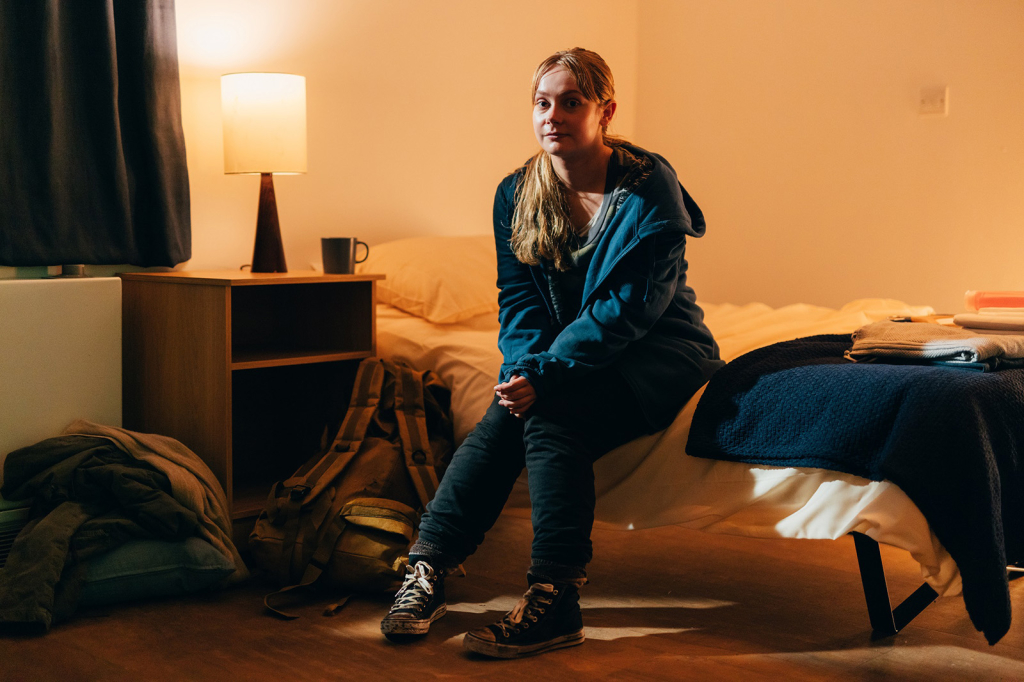
The Kerslake Commission was convened to examine the lessons from the COVID-19 emergency response to rough sleeping, and to understand how the significant progress made can be embedded in the long term. St Mungo’s CEO, Emma Haddad discusses the learnings of the Commission and what it means for addressing the homelessness crisis moving forward. Since becoming the CEO of St Mungo’s in 2022, I’ve had the privilege of being involved in the Kerslake Commission. Founded by Lord Kerslake and my predecessor Steve Douglas, the Commission was a forum for learning the lessons from Everyone In, a pandemic initiative that brought inside significant numbers of people sleeping rough in record time and saved many lives. The Commission convened an advisory board of leading politicians and experts in housing, homelessness and inclusion health, and tasked them to draw out the lessons from the emergency response in collaboration with the wider sector. Without doubt, Everyone In was one of the most impactful rough sleeping initiatives in modern history. It led to a 37% decrease in street homelessness in the year it started. Faced with this unprecedented accomplishment, achieved at a time when rough sleeping could easily have increased and the health impacts on people rough sleeping could have been devastating, the Commission sought to understand why it was so successful and to use this learning to provide a roadmap for permanently ending rough sleeping. As the Commission has now closed, I would like to record my thanks to everyone who contributed to the Kerslake Commission and pay tribute to Lord Kerslake, without whom we could not have brought together such an esteemed group of experts or crafted such an insightful, long-sighted and powerful set of reports that we will continue to use in our drive to end homelessness and rebuild lives. In the face of rising homelessness, we will continue to push the Government to adopt the Commission’s recommendations. We have submitted the Kerslake Commission reports to the Covid Inquiry and gave evidence at its Housing and Homelessness roundtable. We will also continue to use the learnings from the Kerslake Commission as a member of the Government’s Homelessness Expert Panel, to help shape recommendations included in the Government’s National Plan to end homelessness. Here is an overview of what the Commission achieved, provided by Liz McCulloch, who led the secretariat throughout the Commission’s four-year tenure. Everyone In Four years on, and with the Covid inquiry completing its evidence gathering on housing and homelessness, now is a good time to reflect on what was learnt from the Commission, what impact it had on the homelessness and rough sleeping landscape and what more needs to be done. The Commission launched a call for evidence and invited stakeholders who were involved in the Everyone In initiative to give evidence on what worked well, what didn’t work well, the immediate challenges and opportunities, and how the good work could be embedded. In total it received 100 submissions from local authorities, health agencies, homelessness charities, housing associations and people with lived experience, who contributed their experiences and expertise through surveys, focus groups and bilateral meetings. Lord Bob Kerslake, the chair of the Commission, concluded from this evidence, “There are many lessons to learn from the success of the Everyone In initiative but for me, the most important one is that with the right combination of government support and collaboration across, and between, the key service providers, it is possible to end homelessness and rough sleeping. Of course, the circumstances of the pandemic were unique – there were unused rooms available in hotels that could be drawn on for example. But it demonstrated beyond doubt what is possible.” The Learning The Everyone In offer, that anyone at risk of rough sleeping would have access to emergency accommodation, meant that Local Authorities and frontline services were able to quickly provide shelter, at the point of need, and without having to check eligibility or verify if people were sleeping rough. Previously non-UK nationals with limited or unclear entitlements had been treated as ineligible for housing assistance but during the pandemic they were accommodated in hotels, with support and independent immigration advice to resolve their status. This led to an improvement in knowledge, engagement and outcomes for this group, with the crucial learning being that it is easier and more efficient to progress someone’s immigration status and explore their options when they are indoors and can then sleep safely and are provided with trauma informed support. The central Government directive, and funding to match, helped galvanise local agencies with the common objective of saving lives. This led to greater strategic buy in, liberating many from process driven silo structures. An increased sense of shared responsibility and impetus to act meant that agencies took responsibility for clients beyond their remit, with fewer services gatekeeping in order to protect oversubscribed caseloads. Many who had previously refused offers of support and accommodation were successfully brought in and persuaded to engage with services, in some cases for the first time. Treating rough sleeping as a public health issue, rather than just a housing issue, also meant the response saw a substantial and increased engagement from the health sector in rough sleeping. It presented a unique opportunity to work with people who suffered significant vulnerabilities and allowed health services to work with them closely and in a sustained manner. Universal homelessness prevention measures were key part of the pandemic response as they stemmed the flow of people onto the streets, with the evictions moratorium, £20 uplift in Universal Credit and restoration of Local Housing Allowance rates cited as having the most impact. The Commission did, however, identify that the prioritisation of outreach meant that some areas struggled to deliver sufficient in-person, trauma informed, support services to help people manage this period of social isolation; this resulted in more in anti-social behaviour and abandonments than areas where this support was provided. The generic approach of the response also meant that services were geared to meet the needs of people who were in the largest cohorts – primarily adult men. Moreover, though Local Authorities tried to continue an ‘in for good’ principle, there were fewer move on options for people with very high support needs and those with who do not have access to benefits due to their immigration status. Providers and Local Authorities also found the constant bidding for different short term funding pots, and the multiple and lengthy monitoring requirements attached to them, were resource
Celebrating Volunteers’ Week 2025
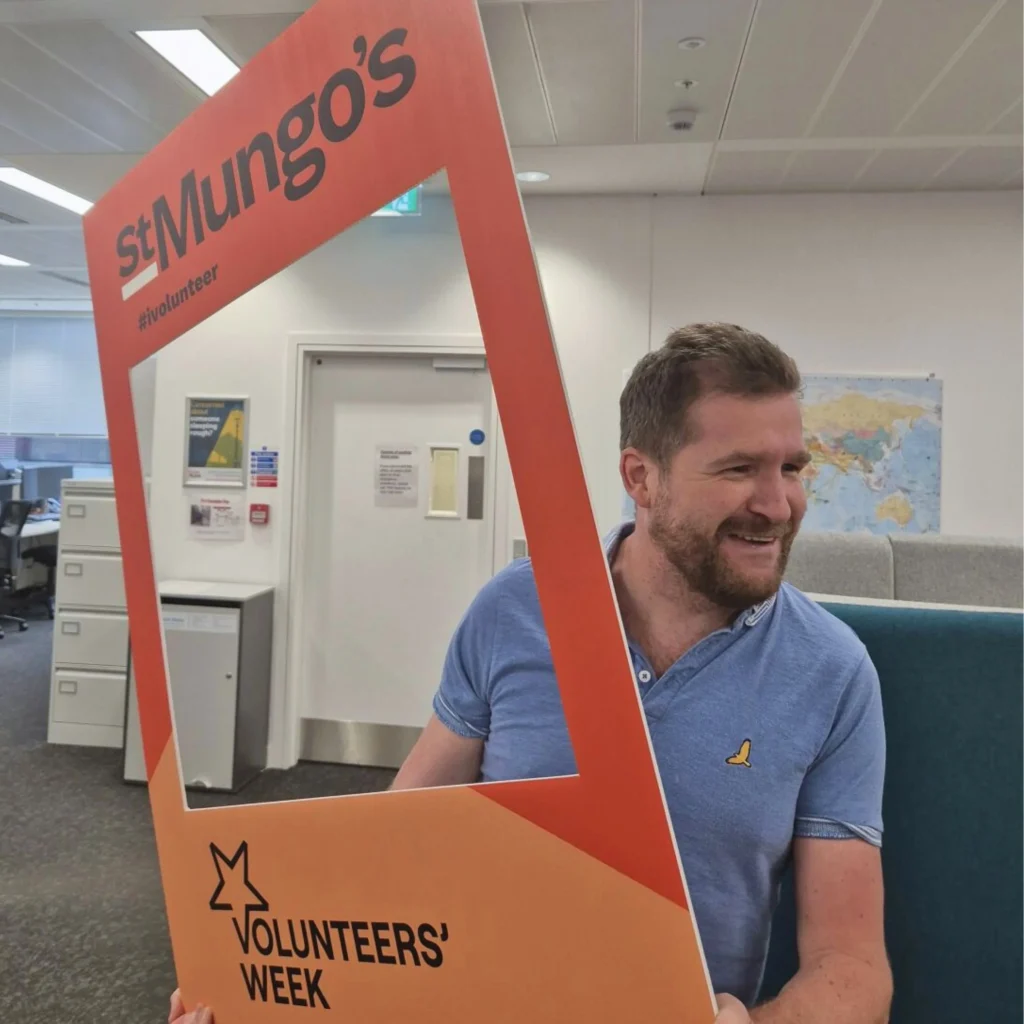
At St Mungo’s, our volunteers are the heartbeat of what we do. Since 1969 when St Mungo’s was started by volunteers, they have remained a vital part of the way that we work and the support we provide clients. We recognise the value and the contribution that volunteers make all year round, but between the 2nd and the 8th of June it is brought into sharper focus as we celebrate Volunteers’ Week. During Volunteers’ Week, which starts today, we celebrate and highlight the critical role our volunteers play at St Mungo’s. During the week we will be running two main celebration events. One in London on the 5th of June and One in Bristol on the 2nd of June. These events give us the opportunity to properly thank and celebrate our volunteers. At both events we will be handing out our Volunteers Awards. These awards are run in partnership with the Marsh Charitable Trust and volunteers whose nominations were successful are awarded £250 and a certificate. Volunteering continues to evolve and at St Mungo’s, it’s no different. Following Covid we were hit by significant reductions in volunteering and we lost over half our volunteers. Since then we have adapted and tried to increase the level of flexibility in our volunteer roles. The development of micro volunteer roles has allowed us to increase the ways in which volunteers can provide support with translation, videography, photography, beauty and hairdressing volunteers being advertised and recruited to. We now have over 100 volunteers who are able to provide support on an adhoc basis. If you’re interested in volunteering, please click here. Since Client Involvement joined the Volunteering, Apprenticeships and Student Placements team, we have also seen an increase in opportunities for clients to become involved. The Client Advisory Board, the Ambassador scheme, client placements and initiatives such as our “repairs champions” ensure that clients have meaningful roles they can undertake, developing new skills and confidence but also adding significant value to the organisation. Volunteering is only effective if the right support is in place so I want to thank the team (Maria, Mena, Imogen, Frances and Amy) for all their work in making sure we bring in and support volunteers in the right way but also a huge thank you to volunteer supervisors across the organisation for the brilliant way in which you support and involve volunteers. Happy Volunteers’ Week 2025
Paws for hope: how pets bring comfort and companionship to people experiencing homelessness
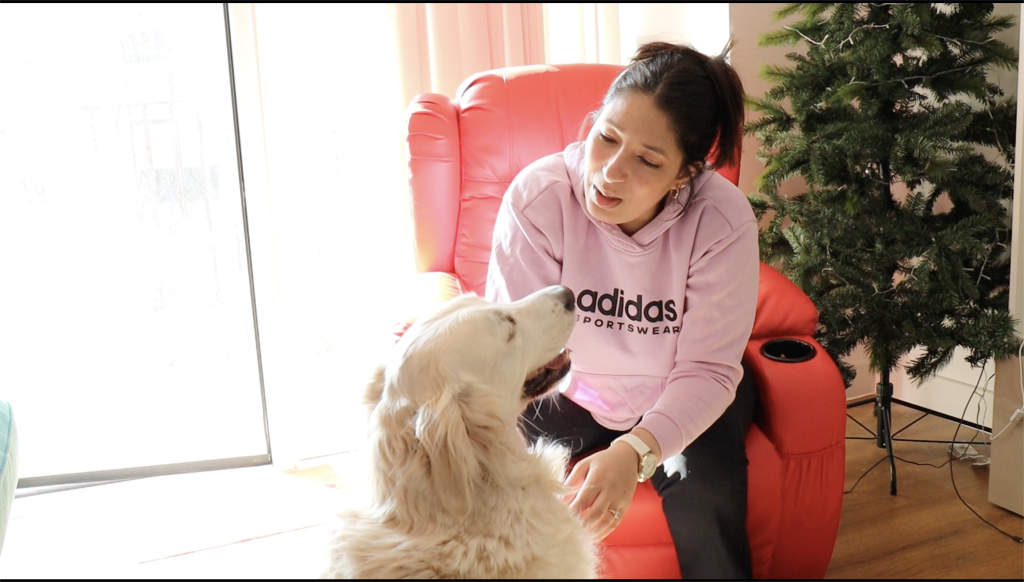
Introduction: April marks National Pet Month in the UK; a time to celebrate the special bond between people and their pets. For many people experiencing homelessness, this bond is even more profound. At St Mungo’s, we’ve long recognised the vital role pets play in the lives of our clients, offering comfort, emotional support, and unconditional companionship in the most difficult of circumstances. This month, we’re highlighting the unique relationships between our clients and their pets, and how we used a trauma informed approach to support them both, especially through our pet-friendly accommodations in various cities. Why pets matter to people experiencing homelessness For people sleeping rough, isolation is often a harsh reality. Pets, especially dogs, provide loyal companionship, a sense of purpose, and even safety. Pets give people a reason to keep going. They’re a source of love in a world that can often feel cold and unwelcoming. And the bond runs deep, it’s not uncommon for people to put their pet’s needs before their own. Supporting clients and their pets: A trauma-informed approach At St Mungo’s, we understand that separation from a pet can be devastating. That’s why many of our accommodation services are pet friendly. We believe no one should have to choose between shelter and their companion. For many, their pet is their only consistent source of emotional support. Recognising that bond builds trust and opens the door to longer-term support. A day in the life: frontline staff and pet-friendly outreach Our workers regularly meet people who will only engage with support services if their pet can stay with them. These frontline colleagues sometimes face logistical challenges: finding pet-friendly emergency placements and making sure both the client and pet feel safe. But they do it with compassion and persistence. Click here to learn more about how we support people experiencing homelessness with their pets. The barriers people face when owning pets while homeless Despite the strong bond between clients and their pets, there are significant barriers to staying together. Many hostels and housing services across the UK still do not allow animals, forcing people to choose between shelter and their companion. At St Mungo’s, we advocate for more inclusive housing models. There are also legal and safety considerations. Some clients worry about their pets being taken away or facing restrictions due to breed laws. Why pet-friendly services work By acknowledging the importance of the human-animal bond, pet-friendly services see higher engagement rates. Clients feel more relaxed, supported, and open to taking steps toward recovery. How you can help this national pet month During National Pet Month, we’re encouraging our supporters to think of the pets who walk the journey alongside people experiencing homelessness. Here’s how you can make a difference: Donate pet supplies – Food, collars, leashes, toys, and blankets make a huge difference. Support our pet-friendly services by contributing to our ongoing work. Volunteer your time – if you’re a trained vet or pet professional, consider partnering with us. Fundraise with a pet theme – Host a dog walk, pet photo competition, or bake sale to raise awareness and funds. Advocate for inclusive housing policies that keep pets and their people together. Looking ahead: compassionate, inclusive care St Mungo’s remain committed to providing holistic care that includes recognising the deep emotional lifeline pets provide. Through pet-friendly services, collaborative partnerships, and the support of the public, we aim to ensure no one is left behind: human or animal. Call to action This National Pet Month, let us recognise the powerful role pets play in supporting people through homelessness. With your support, we can continue to create safe, compassionate spaces where clients and their beloved animals can begin the journey to recovery together. Help us keep people and their pets together. Donate or get involved today.
How we support Muslim clients and colleagues during Ramadan at St Mungo’s

At St Mungo’s, we recognise the importance of Ramadan for our Muslim clients and colleagues. The recently concluded holy month is a time of fasting, reflection, and community, but it can also bring challenges for people experiencing homelessness. That’s why we take thoughtful steps to ensure our services are inclusive, supportive, and responsive to the needs of those observing Ramadan each year. This article explores how we support Muslim clients and colleagues during Ramadan. Providing nutritious meals for Iftar and Suhoor Fasting from dawn until sunset means that access to suitable food at the right times is essential. Some of our services receive food donations that include halal meals, and during Ramadan, we adjust meal schedules to ensure clients have access to food after fasting at sunset (Iftar). Supporting colleagues observing Ramadan Many of our Muslim colleagues also observed Ramadan, and we strived to create a workplace to support this : Offering flexible working arrangements where possible. Providing prayer spaces where feasible. Avoiding scheduling key meetings or events at times that clash with Iftar. Removing communal food from shared spaces out of respect for those fasting. A colleague Yewande, when asked about her experience working as a colleague observing Ramadan, said: What is your experience working as a colleague observing Ramadan? Have any adjustments been made, such as flexible working hours or additional break allowances? My experience working while observing Ramadan has been overwhelmingly positive, thanks to the understanding and support from my colleagues. There’s been a noticeable effort to ensure workloads are distributed thoughtfully, preventing anyone from feeling overwhelmed during fasting hours. One of the most helpful adjustments has been the introduction of flexible break times. This allows staff to split their breaks, making it easier to rest or align time off with Iftar, (the meal that breaks the fast). Additionally, the service I work in offers flexibility with start and finish times, allowing those observing Ramadan to adjust their schedules. While I haven’t personally needed to use this option, I appreciate the thoughtfulness behind it. It’s encouraging to see how small, considerate adjustments can create a more supportive environment, helping everyone feel valued especially during such an important time. One of our frontline workers also shared his experience during the fasting: How have you found working during Ramadan? Have you had any adjustments made to your work to support you? I’ve had a lovely experience fasting during Ramadan while working at St Mungo’s. It’s a part of my life, and I’ve learned to integrate it into my work. In terms of religious inclusivity, one important aspect of my Muslim life is the need for prayer (salah), which requires a designated space. When I first joined the team, there wasn’t a dedicated space available. However, accommodation was made by putting up a sign in one of the assessment rooms for dual use, both for assessments and prayers. How can St Mungo’s improve its approach to religious inclusivity, not just for Ramadan but year-round. As for how St Mungo’s can improve its approach to religious inclusivity, I think it would be helpful to provide clear communication and understanding around flexible working arrangements during periods like Ramadan (if incorporated). Additionally, ensuring that spaces for prayer are consistently available year-round across the different services (as was the case at the head office, which I found useful during my training there) would be a great step forward. Creating inclusive and supportive environments For many Muslim clients, Ramadan is about more than just fasting—it’s a time for prayer, reflection, and connection. We work to ensure our accommodation and support services are as accommodating as possible. We spoke with Becky, a service manager at one of our assessment hubs about the support they were offering to clients: How does your service support Muslim clients during Ramadan, especially those who are fasting? Do you offer any guidance or resources to help clients observe Ramadan while experiencing homelessness? As a fast-paced, rapid move on service we encourage clients to go on viewings and attend assessments regularly as is the nature of how we work. However, it’s important we have an awareness of clients of the Islamic faith and those observing Ramadan and fasting during this time. This is a team effort, and the team ensure that all staff are aware of clients who observe the Islamic faith so that we can amend our ways of working. The team will check the time suitability of an assessment or viewing and work as flexibly as possible. Sometimes, staff will mention times of the day when certain clients have expressed, they’re better positioned to join for meetings or key working sessions, and we’ll always do our best to support this. This year, we also provided dates on our reception. These were placed out just before Iftar for clients to take away ready to consume when they break their fast. We obtained the Ramadan prayer timetable from our local Islamic Centre noting what time clients would be breaking their fast. The team printed & laminated the prayer timetable and placed this on reception – this was not only as reference for the clients observing Ramadan, but to also educate other clients and staff. We also provided some simplified information about Ramadan to provide a little insight into the Islamic faith, such as learning about the significance of offering dates during this time. We also put up Ramadan (and later, Eid) decorations in the reception area which are visible just as you come into the front entrance to the hub. This was to show and raise awareness and to display our respect for the Islamic faith – we felt this was especially important for someone new coming into the hub, who may be mid-fasting and may be concerned about how they would practice or be welcomed at our service. How do you handle situations where a client’s health or well-being might be at risk due to fasting? We are a 24-hour


