
How St Mungo’s Adapts Services During Extreme Weather Conditions

Winter is one of the toughest times for people experiencing homelessness. The freezing temperatures, damp conditions, and harsh weather increase the risk of serious health issues like hypothermia, frostbite and other health complications. In this article, we reflect on how St Mungo’s adapts services during extreme weather conditions, with insights from colleagues and some of our clients. Throughout the colder months, St Mungo’s worked tirelessly to bring people off the streets and into safety. Now, as we welcome spring, the weather may be improving, but the need for support remains. Sudden cold snaps, heavy rainfall, and unpredictable conditions can still put people sleeping rough at risk. Our work continues year-round to ensure that no one is left without shelter, whatever the season. In this article, we reflect on the work that we do, with insights from colleagues and some of our clients. “Here at St Mungo’s, the cold season is another opportunity to engage with people, and for volunteers to experience the work we do and how humanity is at the centre of what we do,” says Hannah Faulkner, our Head of Rough Sleeper Services. What is SWEP, and Why Does It Matter? SWEP means Severe Weather Emergency Protocol, The Local government activates it when temperatures fall below zero, or when weather poses a risk to life. The process focuses on saving lives. It ensures that anyone sleeping rough is offered an emergency shelter. The Pan London SWEP service, commissioned by the Greater London Authority (GLA) and supported by St Mungo’s, is part of this initiative. This protocol, combined with our dedicated frontline workers and service managers, helps bring as many people to safety as possible. New data released on 31 January 2025 by the Combined Homelessness and Information Network (CHAIN) which covers October to December 2024, shows that 4,612 people were recorded as rough sleeping in London between October to December 2024. This is an increase of 5% on the same period last year. The data also shows that during this period: 2,115 people were rough sleeping for the first time, a 7% decrease from 2023 1,872 people were intermittently rough sleeping, 16% higher than last year 704 people deemed to be living on the streets, a 26% increase, and; 1,767 had a mental health support need, 50.1% of the total number of people rough sleeping The Role of Frontline Workers During SWEP Frontline workers play a critical role in ensuring the success of SWEP. Outreach teams hit the streets day and night, with a mission to connect with individuals sleeping rough. Adeola, who worked with our outreach teams this winter said: “Winter is an incredibly tough time for the people we support. When SWEP is activated, my job is to go out and make sure no one is left behind. We approach people gently, offering them a warm place to stay and some hot food. Most of the time, they’re relieved that someone cares enough to reach out.” During a chat with Alisha, who is part of the Oxford Street Population Outreach Team (OxSPOT), she gave us some insights: How does your team prepare for SWEP activations and work with other services? Preparing for SWEP means knowing who is rough sleeping, where they are staying, their support needs, and any risks. We also keep track of their contact details. We monitor referrals and ensure we know where clients are sleeping and any risks they may face. Our team meets to plan who will contact or locate each client. When SWEP starts, it becomes our top priority, so we pause other casework to focus on it. What challenges do you face during SWEP and how do you solve them? The biggest challenge is contacting clients. Some are hard to reach, so we spend a lot of time trying to find them. Another challenge is speaking to clients who refuse SWEP support. We explain the dangers of sleeping outside in the cold and why shelter is crucial for their health. We also face challenges in finding the right accommodation for clients, based on their needs and risks. Can you share a success story from SWEP? SWEP can help clients who haven’t been inside for a while or have refused shelter before. They often realise the benefits of being indoors, which can lead to longer-term solutions. SWEP helps us connect with new clients, allowing us to assist them in finding accommodation and support from other services. In the latest SWEP activation, Oxford County Council’s team worked closely with us. This led to more clients receiving priority placements in hotels. This helps us engage with them longer to ensure they do not return to rough sleeping. Do you make sure clients receive long-term support after SWEP? How? Yes. Clients who join us during SWEP get continued support from St Mungo’s and other services. We help them work towards solving the issue of homelessness in the long term. What is the most misunderstood part of SWEP? Clients often think that the SWEP shelter is permanent housing after SWEP ends. They also assume hotels are always available. Another common misconception is that SWEP only operates when temperatures fall below freezing. Finally, clients think that no help is available after 5 pm. In Oxford, clients can still get help after 11 pm and find a place to stay in the cold. The teams work closely with local councils and other organisations. They ensure there are enough emergency bed spaces available. We handle interactions with care and sensitivity. We recognise that building trust is essential for individuals who have experienced trauma. Inside the Emergency Shelters When individuals arrive at emergency shelters, welcoming colleagues greet them warmly. Shelters provide a safe place to sleep. They offer hot meals and access to essential services. These include long-term housing options, healthcare, and mental health support. Adesewa, a Night Reconnection Worker reflects: “There are nights when it feels overwhelming. You see so many people in need, and it’s hard not to wish you could do more.
Celebrating National Apprenticeship Week

National Apprenticeship Week runs from 10-16 February 2025, with this year’s theme being ‘Skills For Life’. To mark this occasion, we’re taking a look back at the experiences and opportunities that previous St Mungo’s Apprentices have shared. Real-life success stories “Being on an apprenticeship with St Mungo’s has given me diverse experiences that I hadn’t had before, specially working alongside my clients and understanding with a more in depth knowledge on how to support my team and clients. Having a good, strong team has helped with my development and growing my confidence in key working daily. Every day I learn new things. My biggest achievement throughout the apprenticeship is that I have got more leadership skills and I am able to manage people & empower them to thrive for their goals.” – Noel, former Apprentice “I really do enjoy [the role]. It’s challenging at times. But most days, actually, are really good. You have really good interactions, really meaningful conversations, you can see small bits of progress in the people you work with.” – Ashley, former Apprentice The Value of Apprenticeships at St Mungo’s The Apprenticeship scheme at St Mungo’s was the first in the sector only open to those with lived experience, substance use, mental health, criminal justice service and recovery services, providing skills and experience apprentices need to find a job within the homelessness sector or further afield. Of those that have completed the scheme, many have gone on to further full time work with St Mungo’s or with other homelessness charities or further afield. The scheme offers 18 months paid work, a comprehensive training programme and the opportunity to gain a qualification as a peer support worker, and offers apprentices the opportunity to gain the skills and experience needed to equip them to work in our services and within the sector. Throughout your apprenticeship you will receive support tailored to your needs not only from your line manager and your course tutor but also from our Volunteering, Apprenticeships and Involvement team. Get involved! If you’re interested in finding out more about Apprenticeships and St Mungo’s, contact our Volunteering, Apprenticeships and Involvement team at apprenticeshipscheme@mungos.org to join the mailing list. Visit our Apprenticeship page to learn more about St Mungo’s programme. National Apprenticeship Week runs from 10 – 16 February 2025.
We can’t end homelessness alone

We know we can’t end homelessness alone. As well as working in formal partnerships, our teams often rely on other community groups and charities so our clients get what they need. One of our frontline workers, *Sam, tells us about his work with a client and Hackney Food Bank. It’s a Saturday morning, and Sam is collecting food for a client who arrived at one of our hostels overnight. His client has been sleeping rough and is trying to overcome substance use issues. He arrived with no food so this emergency parcel from Hackney Foodbank is a lifeline. Sam can empathise more than most, having been homeless for 10 years from the age of 16, and in and out of the criminal justice system for petty crime. He said: “I got into a St Mungo’s hostel in 2012 and started volunteering – eventually I applied for a role there. I’d never had a job before then. Our support workers help people learn to live independently; we help them access benefits and we take them to appointments. “From time to time I pick up emergency food from Hackney Foodbank for my clients. The man I’m supporting today has been rough sleeping for a year. He doesn’t have any food and he can’t cook. He has mental health needs and drug dependency, and he doesn’t know how to keep clean. I’m working on a safeguarding referral for adult social care for him. “Many of the people we support don’t have any food or any recourse to public funds. Sometimes I bring them with me to the food bank to collect, other times I pick up food for them. I believe in everyone we support – setting the foundations; giving them a place to start from is a help. I’m blessed to have something meaningful to do.” Sam, who has two young children, turned his life around after a difficult start. He added: “Life for me is good now. I have secure accommodation. I always thought I’d never get a job but once I got the opportunity with St Mungo’s I never looked back at the old life. It’s not how you start – it’s how you finish!” Hackney Foodbank is part of the Trussel Trust Network. The charity has six distribution centres and the Hackney Giving Van (a mobile food bank, which reaches other parts of the community.) Hackney Foodbank * Sam’s name has been changed to protect his identity.
The homelessness crisis must galvanise action from the future government
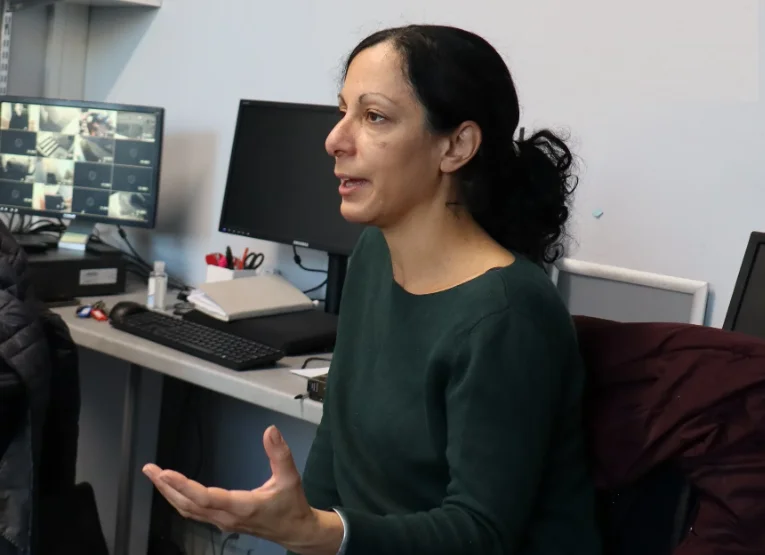
Emma Haddad, CEO of St Mungo’s The homelessness crisis must galvanise action from the future government. Reversing the recent and significant growth in homelessness will not be easy, but it is not impossible. Here are St Mungo’s suggested priorities for the next government to end homelessness and support people to rebuild their lives. We are, without a doubt, in a homelessness and rough sleeping crisis. Numbers for both are at all-time highs, with close to 4,000 people sleeping on the streets every night, and almost 80,000 households experiencing homelessness or at risk of it. Currently, our outreach teams are struggling to respond to the increasing number of people on the streets and our hostels are at capacity. There are not enough affordable or appropriate homes, making moving on from the streets more challenging than ever. St Mungo’s is here to end homelessness, but we cannot do it alone. We want to work constructively with whoever forms the next government to bring about fundamental change to a system that is failing. The situation is directly linked to political choices. We see the fall-out every day. People who have no choice but to sleep rough, people in work who cannot afford their rent, people who are fighting to rebuild their lives. It does not have to be like this. There are a number of different political choices that can be made after 4 July that can turn the tide on this crisis. We are asking the next government to focus on four areas: emergency support, prevention, recovery, and a long-term plan to ensure there is sufficient, appropriate and affordable housing for people to live in. It is complex, but far from impossible. First, we need to protect essential funding for homelessness support. We need to ensure that the current funding through the Rough Sleeping Initiative (RSI) and wider local authority funding is continued and expanded, so there is sufficient emergency accommodation and support available to help the growing numbers of people on the streets. Thousands of people rely on services supported by this critical funding and, despite skyrocketing demand, RSI funding is due to end in April 2025. If this funding is not extended, about a third of the projects that St Mungo’s delivers with local authorities may not be able to run. This funding must also be expanded, so that we can provide services that match the rapidly increasing demand and escalating running costs. Second, we need to take steps to prevent people becoming homeless in the first place. People living in the private rented sector are particularly vulnerable to homelessness. Recent government data shows that the private rented sector is increasingly unstable, with nearly 45% of households at risk of homelessness between October and December 2023 being in private rented accommodation. Despite being in the manifesto for the last government, progress was not made to pass the Renters’ Reform Bill. Urgent action is needed to protect renters from homelessness through comprehensive changes to current legislation. We also know that many people sleeping on the streets for the first time are coming from government institutions. From asylum accommodation leavers to people discharged from hospital or released from prison, we know that things can be done to ensure no one leaves these institutions without having somewhere safe to stay. The sharpest increase in homelessness from an institutional setting last year was from Home Office accommodation. Despite some positive changes, between July and December 2023 the number of people leaving asylum support accommodation and sleeping rough soared by an astounding 965.91%. Third, there must be recognition of the complexities of homelessness and rough sleeping, and significant investment in recovery. People sleeping rough experience some of the most severe health inequalities and are one of the most disadvantaged groups in our communities. We need to ensure that the health system is equipped to support people who have experienced homelessness. One such measure is ensuring that Integrated Care Boards have a dedicated focus on eliminating the health inequalities that people like our clients face. We need to reform the welfare system to remove barriers and disincentives to work. Almost two thirds of our clients in supported housing want to work, but many are reluctant because they know working will negatively impact their benefits.. This means that even when working more hours, their finances could fall off a cliff edge and put their housing at risk. The next government must also remove restrictions to full housing benefit entitlements under Local Housing Allowance rates, to help people into housing. Finally, we need more affordable and appropriate housing. All too often, even when we can provide people with emergency support and have worked with them to prepare for independent living, we cannot find them the right home. There simply isn’t the housing supply available. We need a long-term plan for more permanent housing. That means 90,000 new social homes per year, as well as supported housing and affordable private rented housing. We need a credible plan that shows how, over time, the new government will build capacity into the system which is appropriate to the needs and financial situations of all people experiencing homelessness. The trauma of homelessness devastates too many lives. It should not exist in the twenty-first century. However, it can be prevented by targeting the causes, intervening early, and investing in the right approaches.
How to register to vote if you’re experiencing homelessness

The general election has been called and we have a date – Thursday 4th July. People who are experiencing homelessness or have no fixed address can vote. Voting is a vital opportunity for all of us to make our voice heard. Below is a brief guide on how to register to vote with key links. There is also guidance on the requirement for voters to have valid photo ID which was introduced last year, and how people who may not have mainstream ID can apply for a Voter Authority Certificate. If you, or anyone you know is experiencing homelessness, please read and share this information to make sure that everyone who wishes to vote has the opportunity. When is the deadline to register to vote in the 4 July 2024 general election? You need to register by 11:59pm on Tuesday 18 June 2024 to vote in the general election on Thursday 4 July. If you want to vote by post, you must apply by 5pm Wednesday 19 June. And if you want a proxy vote, you must apply by 5pm Wednesday 26 June. Further information on the election in your area, including lists of candidates and information on your polling station can be found here. Who can register to vote? To register to vote in the UK general election, you must be aged 16 or over. You must also be one of the following: a British citizen an Irish citizen living in the UK. a Commonwealth citizen who has permission to enter or stay in the UK, or who does not need permission. You can register to vote in the general election if you will be aged 18 or over on the day of the election. There are different rules for who can register and vote in Scottish Parliament, Welsh Senedd and local elections in Scotland and Wales. You can check which elections you’re eligible to vote in here. You normally only need to register once – not for every election. You’ll need to register again if you’ve changed your name, address or nationality. How do I register to vote? The easiest way to register to vote is online, providing you know your National Insurance Number and date of birth. If you can’t provide one or either of those things, you will need to contact your local Electoral Registration Office (they will also post a paper form to you if you require it). You could also download a Register to Vote form and return it by post. How can I register to vote if I’m homeless/have no fixed address? You can vote if you’re experiencing homelessness, remanded in custody, or a patient in a mental health hospital. In order to vote, you need to give an address of a place where you have lived in the past, the place where you’re staying temporarily, or where you would be living if it were not for your current situation. If you are experiencing homelessness with no fixed address, you can register to vote by giving details of where you spend a substantial amount of your time. This could be a night shelter, or hostel, a day service you go to regularly. How do I vote? Once registered, you can head down to your local polling station in person, which will usually be in a public building, like a school or a local hall. If you live away from home or are abroad, you can vote by post. If you are unable to vote in person, you can also ask someone to vote on your behalf, which is known as a proxy vote. The eligibility criteria to vote in different elections can be found here. Do I need photo ID to vote? You’ll need to show photo ID when voting in person in some UK elections or referendums – this includes the 4 July general election. This legislation came into effect from May 2023. You’ll need it to vote in: UK parliamentary elections, including general elections and by-elections. recall of MP petitions in England, Scotland and Wales local elections in England (including councils, mayors, the Greater London Authority and parishes) Police and Crime Commissioner elections in England and Wales neighbourhood planning referendums in England local authority referendums in England (including Council Tax increase referendums) What photo ID is accepted? You’ll need one of the following types of photo ID to vote: a UK or Northern Ireland photocard driving licence (full or provisional) a driving licence issued by an EU country, Norway, Iceland, Liechtenstein, the Isle of Man or any of the Channel Islands a UK passport a passport issued by an EU country, Norway, Iceland, Liechtenstein or a Commonwealth country. a PASS card (National Proof of Age Standards Scheme) a Blue Badge a biometric residence permit (BRP) a Defence Identity Card (MOD form 90) a national identity card issued by the EU, Norway, Iceland or Liechtenstein a Northern Ireland Electoral Identity Card a Voter Authority Certificate an Anonymous Elector’s Document You can also use one of the following travel passes as photo ID when you vote: an older person’s bus pass a disabled person’s bus pass an Oyster 60+ card a Freedom Pass a Scottish National Entitlement Card (NEC) a 60 and Over Welsh Concessionary Travel Card a Disabled Person’s Welsh Concessionary Travel Card a Northern Ireland concessionary travel pass What if I don’t have accepted photo ID? If you do not have a type of photo ID that allows you to vote, you can apply for a Voter Authority Certificate. You only need to apply for a Voter Authority Certificate if: you do not have accepted photo ID. you no longer look like the photo on your ID. the name on your photo ID is different to your name on the electoral register. You’ll need to apply by 5pm on Wednesday 26 June 2024 to get a Voter Authority Certificate for the 4 July 2024 elections. How do
Celebrating our volunteers
Over 50 years ago, a group of volunteers wanted to do something to help the people they saw sleeping on the streets. They founded St Mungo’s. Today, volunteers continue to play a vital part in our work to end homelessness and rebuild lives. This Volunteers’ Week, we’re hosting celebrations to say a massive thank you to all 350 volunteers who have supported us this year. We’ll be announcing the winners of this year’s Volunteer Awards, with prizes generously donated by the Marsh Trust. Iver Morgan, our Head of Volunteering, Apprenticeships, Involvement, and Student Placements, said: “Whether they are answering the phones at Streetlink, translating for our clients,?delivering activities in our services, or using their lived experience to support others. Their contribution is immense. They give their time, skills and experience as we work to support people at a difficult point in their lives. We genuinely couldn’t run St Mungo’s without them.” To mark Volunteers’ Week, we talked to some of our volunteers about their experiences. Pat runs a gardening club with the residents in one of our services: “I noticed the rise of people on the streets in London, and I felt I had do something. I’m not qualified to do support work, but anyone can help, even in a small way. A professional gardener would turn up and the whole thing would be finished in a day. What they would do in three hours has taken me six weeks, because we work at the pace of the residents. I don’t get frustrated by that. It’s good for the residents, it’s good for me, and it’s good for St Mungo’s. Everybody benefits. Some of the residents have medical issues that impact their mobility, but there are still ways they can get involved. Even if they just sit and watch, they’re outside in the fresh air. And that’s a contribution. I ask the residents for instructions and involve them in the decision making process. As a volunteer, you need empathy. You’d have to have a heart of stone not to want to help these residents. There’s one resident who comes out to the garden every week, so I gave him his own gardening gloves. I said to him ‘here, these are for you. You take these and keep them in your room’. His face lit up. I’d like to thank St Mungo’s for giving me the opportunity to do this, and the staff who’ve made it possible. If you’re trying to build a career, especially in any kind of caring profession, a stint at St Mungo’s can only do you well. There’s a wide range of things you can do. The role I do is very specific, and it fits well with me. There are lots of other roles I couldn’t do – but there’s something for everyone.” See how you can use your skills to make a difference by exploring our current volunteering opportunities.
What is the Rough Sleeping Initiative?
The Rough Sleeping Initiative is a critical issue for organisations across the homelessness sector. And as the Autumn Statement looms, it’s more important than ever that we understand what the initiative is, and why it’s vital it is continued. So, what is the Rough Sleeping Initiative? The Rough Sleeping Initiative is a package of measures, including a pot of funding allocated by the government to tackle rough sleeping. It exists to provide targeted support for frontline services who work directly with people who are sleeping on the streets. Who receives the funding? Local authorities receive the funding and distribute it to local services and charities. The initiative funds outreach teams, emergency accommodation and support workers. St Mungo’s has received part of this funding since its inception. Why hasn’t homelessness reduced in line with this funding? The cost of living crisis has soared in recent years, and this has put more people at risk of homelessness. So much so that data released in April 2024 showed a 33% increase in rough sleeping numbers in London. Moreover, the funding from the Rough Sleeping Initiative hasn’t increased in line with the rising demand for our services, and the increasing costs of running them. When is it due to end? The policy was implemented in 2018 with funding packages of different lengths. But with this package of funding starting in 2022; it is due to end in April 2025. If it ends as planned, this puts thousands of people experiencing homelessness at serious risk, as their access to services could end abruptly. What can be done about it? We are campaigning for the Rough Sleeping Initiative to be extended and uplifted alongside wider critical Government funding. As a result, frontline workers like ours to meet the growing demand for our services.
Mental health is a shared journey

It’s Mental Health awareness week. Mental Health and homelessness are tightly connected and about three quarters of the people we work with need support for their mental health. Leon Eckford, our Repairs and Voids Manager and member of our Lived Experience Network, shares his thoughts. At St Mungo’s, we are dedicated to ending homelessness, recognising that lacking a stable home is a significant factor in mental health challenges. My experience as an Outreach Manager in Tower Hamlets highlighted how exposure to trauma and violence perpetuates the struggle for many people. Rough sleepers face constant risks, from physical violence to sexual assault, exacerbating mental health conditions like PTSD, depression, and anxiety. The struggle for basic needs like food and shelter deepens feelings of hopelessness and despair, further deteriorating mental wellbeing. Moreover, the physical toll of homelessness compounds these challenges, leading to a complex interplay between mental and physical health. Mental Health Awareness Week serves as a global platform to educate, destigmatize, and advocate for better resources and support systems. Through seminars, workshops, and community events, the aim is to foster understanding and provide resources for those affected. Breaking down societal barriers and encouraging conversations around mental health is vital for overall wellbeing. Several factors contribute to the rise in mental health issues. Improved societal attitudes lead more individuals to seek help, though reliance on medication as a quick-fix solution poses its own challenges. Reflecting on past societal norms, particularly regarding male mental health, underscores the progress made but also the work left to do in combating stigma. Modern life introduces various stressors, from financial pressures to social media-induced comparisons, exacerbated by the isolation of the COVID-19 pandemic and now the cost-of-living crisis. Technology, while beneficial, also contributes to feelings of isolation. Personal experiences, such as growing up in a single-parent household, highlight the impact of family structure on mental wellbeing. While genetics and biology play a role, environmental factors significantly influence mental health outcomes. Despite these challenges, there are simple strategies to manage mental health and emotional wellbeing. Recognising that it’s a journey, seeking support, and finding personalised coping mechanisms are crucial steps. This year’s campaign mantra, #momentsformovement, emphasizes the importance of staying active and connected. Maintaining supportive relationships and seeking professional help when needed are vital for navigating mental health challenges. In closing, let’s prioritise peace, love, and light, remembering that mental health is a shared journey.
NEW DATA: Government data shows 33% increase in rough sleeping numbers in London

Headline Statistics New data was released today (30 April 2024) by the Combined Homelessness and Information Network (CHAIN) which covers January to March 2024. In total, 4,118 people were recorded as rough sleeping in London between January to March 2024, this is an increase of 33% on the same period last year. 2,038 people rough sleeping for the first time, a 37% increase on the same figure this time last year. 511 people deemed to be living on the streets, 36% higher than the same figure this time last year. 1,637 people were intermittently rough sleeping, 29% higher than the same period last year. The Department for Levelling Up, Housing and Communities (DLUHC) also published data today for October – December 2023, which shows an increase in statutory homelessness. 78,980 households were homeless or at risk of homelessness, an increase of 8.8% from the same period last year. The figures also demonstrate an increasingly unstable private rented sector, with 44.4% of the households at risk of homelessness renting privately – an increase of 7.2% from last year. Chief Executive of St Mungo’s, Emma Haddad, said: “It is truly devastating to see yet another rise in homelessness across London and a 37% increase in those sleeping rough for the first time. Every day our outreach teams are trying to support more people off the streets, but the huge shortage of affordable and appropriate housing makes this really challenging. With the Mayoral and London Assembly Elections this week, and a general election to come, we urge those elected to make ending homelessness a priority. Homelessness devastates lives, and our collective focus must be on preventing it at all costs.”
Neurodiversity Celebration Week – My own experiences of ADHD

It is Neurodiversity Celebration Week, which is an excellent opportunity to spread awareness of neurodiversity and celebrate what it means to be neurodiverse. Lottie Baker, Service Manager at Grange Road, gives us an insight into her own experiences of Attention Deficit Hyperactivity Disorder (ADHD) and how this has positively impacted her work. At 27 I was diagnosed with ADHD. I’d wondered about it for years, but I wasn’t diagnosed as a child so I figured I couldn’t have it. As research and information about adult ADHD grew, l realised more and more it matched my experience of the world. After years of thinking about it I decided it was time to resolve the lingering question mark. After diagnosis, there’s relief, finally you know what is going on and why you find things harder than most people. There’s also a sense of sadness for many, reflecting on what you could have done if you’d known sooner or all the times you exhausted yourself trying to keep up with others, not knowing your brain simply worked differently to theirs and made it harder. It’s easy to fall into this thinking, but I also found that ADHD benefitted me in ways I wouldn’t have considered. As a project worker ADHD helped me be proactive and step up to solve problems I saw needed to be addressed. My brain loves solving problems and puzzles, so I could apply this to my everyday work and use it to create opportunities for my development. I was also calm under pressure and during incidents. The adrenaline and high-pressure environment calmed my brain, in the same way ADHD medication does, and helped me zone in on what needed to be done. Looking back, I can see that ADHD made me a good fit for this line of work. In a sector where things change quickly, need urgent attention, require problem solving and quick thinking, my fast past brain thrives and can be used to its full potential. To make the most of ADHD brains at work there needs to be support to utilise the strengths, but also support with challenges. So, I want to share some of the things I’ve found helped: Be kind to yourself Be honest: If you find something hard, talk about it and explain why it’s hard for you. You need to be honest about what support you need. Change what you can: Adapt ways of working if you can. If things can’t be changed identify the barrier and how you can work around it (e.g. something is boring, and you find it hard to complete – can you factor in rewards or gamify it to make your brain more interested) Find what works for you: What works for one won’t for another, so be flexible and test things out. There’s endless advice and tips online so research and find what works. Share and talk about it: ADHD can make you feel isolated, if you can talk to other ADHD people. Don’t underestimate how much talking to someone who understands your experience can help. There are a wide variety of webinars you can get involved with and resources you can download on the Neurodiversity Celebration Week website.


