
St Mungo’s responds to latest stats showing further increases in homelessness

New quarterly data on Statutory Homelessness in England was released today (28 November 2024) by MHCLG which covers the period April to June 2024. In total, 83,240 households were homeless (45,980) or at risk of homelessness (37,250) in England between April to June 2024. This is a 13.8% increase in the number of households assessed as homeless on the same period last year. The data also shows that during this period: End of private rented Assured Shorthold Tenancy (AST) was the most common reason for households being at risk of homelessness, accounting for 15,350 or 41.2% of households. Requirement to leave accommodation provided by the Home Office as asylum support as a reason for households assessed as homeless saw a 308.5% increase from the same period last year to 3,840 households. 123,100 households were in temporary accommodation on 30 June 2024, up 4.9% from the previous quarter and up 16.3% from the same time last year. Chief Executive of St Mungo’s, Emma Haddad, said: “Today’s latest statistics show the scale of homelessness across society and, by definition, the devastating impact it has on people’s lives. “St Mungo’s frontline teams are working to help as many people as possible day and night. Right now, our hostels are providing somewhere safe and warm to stay out of the cold, which poses very real dangers to people experiencing homelessness. With support, this can be the first step to finding a more settled place to live. “But the sheer number of people who are homeless or at risk of homelessness shows that we cannot only focus on a crisis response. We need a longer-term vision, funding and partnership working to prevent people facing homelessness in the first place. “Now is the time to respond so that everyone has a safe home and a chance to rebuild their life. You can help us end homelessness for good by supporting our winter appeal.”
St Mungo’s warns of dangers to rough sleepers as temperatures drop

Leading homelessness charity St Mungo’s is warning of the extreme dangers cold weather presents to people sleeping rough as freezing temperatures continue to sweep the country. As temperatures plummet many councils are activating their emergency response. This is designed to help people who are street homeless stay safe during extreme weather. Known as ‘Severe Weather Emergency Protocol (SWEP)’ the plans see increased outreach shifts and more accommodation made available, with the aim of ensuing nobody has to sleep on the streets during such extreme conditions. SWEP has been activated in the following areas where St Mungo’s operates: Across London Reading Bristol Oxford Bournemouth Currently London and Bournemouth SWEP will be reviewed on a daily basis. Oxford and Bristol have been called until Friday 22nd and Reading until Monday 25th November. St Mungo’s Outreach Teams have increased the number of routine shifts being carried out across the activated cities and will continue to ensure that everybody who is on the streets is offered a safe and warm space to stay indoors overnight. Hannah Faulkner, Head of Rough Sleeping Services at St Mungo’s said: “These low temperatures can kill people who are street homeless and it is absolutely right this is treated as an emergency. “As ever St Mungo’s teams are prepared to respond to this critical situation. We will continue to work tirelessly around the clock to ensure that people are brought into the safe and warm and prevent rough sleeping in freezing temperatures, which can also increase the risk of hypothermia. “During periods of cold and extreme weather it is essential that members of the public, people experiencing homelessness and other support services are all aware that additional accommodation and support is available. “Anyone who is concerned about a person who is street homeless should contact StreetLink. And, as ever, if someone is in an emergency situation people should call 999.” StreetLink operates 24 hours a day, 365 day a year with alerts being passed to local outreach teams who then use the information to find and support people sleeping rough. Find out more here – https://thestreetlink.org.uk/
St Mungo’s responds to emergency fund launched for London’s rough sleepers this winter
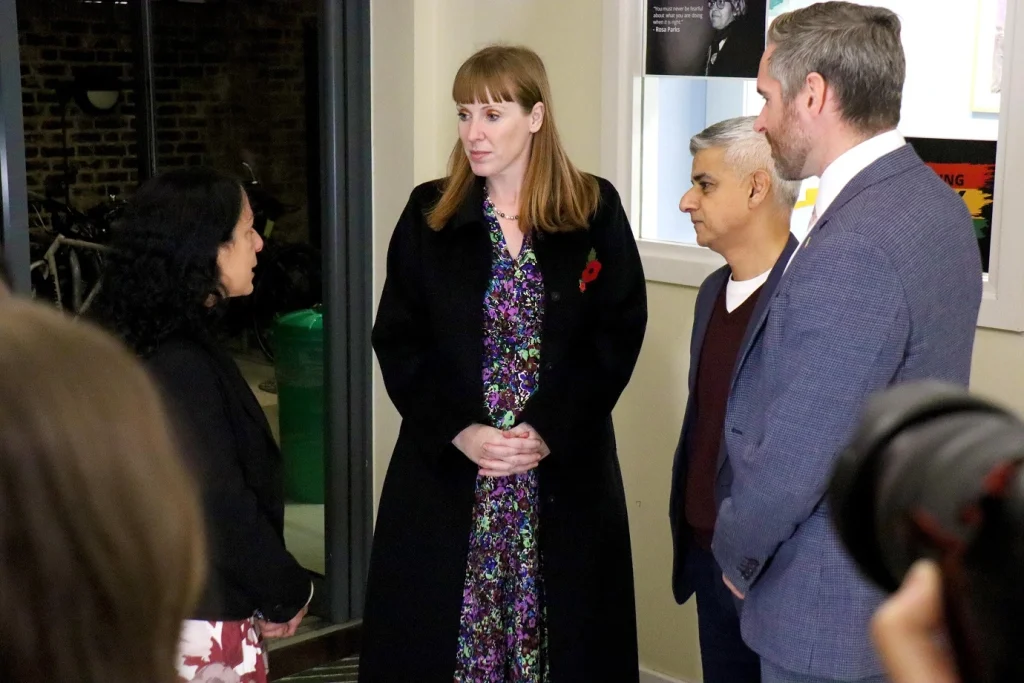
Deputy Prime Minister announces an immediate £2.7million emergency support package for London’s rough sleepers. Today ministers across government meet to discuss plans to tackle homelessness and rough sleeping for good. Follows £233million announced at budget to tackle homelessness and a recent visit by Deputy Prime Minister, Angela Rayner, and Mayor of London, Sadiq Khan, to one of St Mungo’s homelessness services. An emergency £2.7million fund for London has been launched by the Deputy Prime Minister as part of a £10million package for rough sleepers across the country this winter. The funding boost can help to save lives this winter, ensuring rough sleepers have access to a safe and warm bed. This comes as rough sleeping in the capital hit another record high this summer, with 4,780 people sleeping rough. Last year a devastating 155 people died rough sleeping on our streets. Last week in the Budget, it was announced an additional £233m will go to tackling all forms of homelessness, taking total spending on reducing homelessness to nearly £1bn in 2025-26. This money will directly fund critical services to prevent homelessness and support people into secure, stable housing. St Mungo’s is on the frontline of this homelessness emergency. The charity operates in parts of the UK facing the highest levels of homelessness. London is a hub for the UK and abroad and it sees some of the highest levels of people rough sleeping because of this. Earlier in the week, Deputy Prime Minister, Angela Rayner, and the Mayor of London, Sadiq Khan, visited one of St Mungo’s services in London to discuss the need for support – particularly as winter creeps in, which brings increased threat to people rough sleeping. St Mungo’s CEO Emma Haddad commented:“Our outreach teams respond to homelessness all year round, but in the winter they are literally saving lives. For the thousands of people sleeping rough across the UK, sub-zero temperatures heighten the risk of hypothermia, compounding the dangers people already face when they don’t have somewhere to live. “As such, we welcome today’s announcement of £10 million to ease winter pressures. This funding is vital to support services like ours to provide extra beds to bring people in from the cold. Once in the warm, we can then support to find routes out of homelessness for good. “However, beyond the winter a much broader and more sustainable solution is needed to prevent people from becoming homeless in the first place. Longer-term funding and partnerships will be key.” Today the Deputy Prime Minister is chairing the first cross-government group on tackling homelessness. During the meeting the Deputy Prime Minister will pledge to end “sticking plaster” measures, and instead tackling the root cause of the problem. The taskforce is a first step in the plan to develop a long-term strategy to tackle all forms of homelessness, bringing together healthcare, the justice system and education. Emma continued: “The Deputy Prime Minister’s Interministerial Group on Tackling Rough Sleeping and Homelessness is a really important step in bringing the people with the levers round the table, because we know that homelessness touches on so many areas – health, housing and employment to name but a few. A coordinated effort is the only way to end this humanitarian and moral emergency and rebuild lives.”
St Mungo’s responds to latest stats showing further increases in rough sleeping in London

New data was released today (31 October 2024) by the Combined Homelessness and Information Network (CHAIN) which covers July to September 2024. In total, 4780 people were recorded as rough sleeping in London between July to September 2024. This is an increase of 18% on the same period last year. The data also shows that during this period: 2343 people were rough sleeping for the first time, a 12% increase on the same figure this time last year. 1872 had a mental health support need, 52.3% of the total number of people rough sleeping 1832 people were intermittently rough sleeping, 17% higher than the same period last year 681 people deemed to be living on the streets, 42% higher than the same figure this time last year. Chief Executive of St Mungo’s, Emma Haddad, said: “It is heartbreaking to see the latest reality of the homelessness crisis brought home by these figures – almost 5,000 people sleeping on the streets of London in just three months is a number that should incense us all. With a massive increase in the number of people sleeping rough for the first time, alongside a massive increase in the number of people actually living on the streets, we need to treat this as an emergency. “Our outreach teams are on the frontline of this crisis right now. They supported 9,000 people rough sleeping in the UK last year. They are also responding to increased levels of need, with mental health needs particularly pronounced The allocation of £233 million for homelessness in yesterday’s Budget is welcome news and will help us respond to the thousands of people who are sleeping rough. However, we know that funding must be sustainable, long term and part of a much broader solution that prevents people becoming homeless in the first place. Only then will we – national, local and civil society partners – be able to say confidently that everyone has somewhere safe and warm to live.”
St Mungo’s response to the Autumn Budget 2024

Following our persistent campaign over recent months, we are pleased that the Government has announced £233 million for local authorities to tackle homelessness and rough sleeping, as set out by the Chancellor in the Autumn Budget on Wednesday 30 October. Though the Chancellor did not confirm an extension of Rough Sleeping Initiative (RSI) funding, we are pleased that £233 million has been confirmed for local authorities to tackle rough sleeping and homelessness for 2025-26 to help meet demand and avoid the cliff-edge when RSI funding is due to end at the end of the financial year. We also welcome confirmation that in the next phase of the Spending Review, the Treasury will work with MHCLG and others in the cross-government taskforce to address homelessness and rough sleeping in the long-term. This year St Mungo’s, working with partner organisations and supporters called on the Government to extend Rough Sleeping Initiative funding. The vital funding is due to end at the end of March 2025, despite increasing demand for services as the number of people experiencing rough sleeping continues to rise. Last year, rough sleeping in England increased by 27%, with almost 4,000 people on the streets on a given night. Rough sleeping in London has also hit record levels with almost 12,000 people recorded as rough sleeping in the capital. We look forward to working closely with the Government to make progress on ending homelessness. We hope that the positive news today reflects the Government’s long-term commitment to sustainable funding for tackling homelessness.
Hope for people in Brighton experiencing homelessness and their dogs

St Mungo’s has been endorsed under the Dogs Trust Together Through Homelessness scheme. This endorsement is given to homelessness services which go the extra mile to help keep people experiencing homelessness and their dogs together. St Mungo’s aims to end homelessness and rebuild lives, running hostels and emergency accommodation, giving people the time and space they need to recover. In Brighton, thanks to its dog friendly policies, St Mungo’s hostel can support up to four dogs and three other pets at one time. Three residents currently have dogs and are supported through the free Together Through Homelessness vet scheme. The accommodation is made up of 23 flats, with separate kitchens and living spaces, a perfect environment for someone transitioning to independent living with their dog. To ensure more people experiencing homelessness can stay with their pets, bespoke pet policies were implemented and an in-person consultation; the team also provided a starter pack of dog accessories, including dog beds, food, collars and leads. Alongside support in setting up the service, the Together Through Homelessness vet scheme is providing free vet care for all dogs living at the service going forward. Remi Weremczuk, Service Manager at St Mungo’s said: “We are delighted to welcome dogs into our hostels with their owners as we know just how important the bond between them is. Often a person’s pet is their only support and their family, who they would never leave behind. “We look forward to our continued work with the Dog’s Trust and thank them for the support thus far.” In a recent survey of professionals supporting those experiencing homelessness, 70% of people said that their clients had experienced barriers to accessing homelessness services because they have a dog. Further to this, 84% were aware of one or more cases where someone had refused an offer of temporary or emergency accommodation as it would have meant giving up their dog. Just 51% of the homelessness services that responded to the survey said that their services were dog friendly. The Together Through Homelessness project works directly with services to help them become dog friendly, offering bespoke support and ongoing advice on everything from dog friendly policies to behaviour resources. The project also provides free veterinary treatment to dogs whose owners are experiencing or at risk of homelessness, an online directory of dog friendly homeless services in the UK and a Christmas parcel service. Find out more about St Mungo’s work in Brighton here. For more information about the Together Through Homelessness project see here and support available to dog owners experiencing homelessness.
St Mungo’s launches first-ever brand campaign

The charity’s ‘We’re Here’ campaign aims to boost awareness of its services at a time of crisis for homelessness Creatives are being displayed across a range of locations in the capital linked with rough sleeping Homelessness charity St Mungo’s has launched its ‘We’re Here’ campaign to make more people aware of its specialist services and to garner more public awareness and support. As the cost-of-living crisis and lack of affordable housing bite, the charity is seeing increasing numbers of people rough sleeping for the first time. In London, where this campaign is running, the latest figures show a 20% increase in people sleeping rough for the first time, up from the previous year. However, there is limited public awareness of St Mungo’s specialist support to end homelessness and rebuild lives. In response to this, the charity is displaying a range of creative imagery and narrative arcs of people who have faced rough sleeping. Throughout September, these will be displayed in billboard and bus stop locations across Greater London, from Great Suffolk Street to Waterloo. These are all located at street level, with many positioned in areas where rough sleeping is prevalent. Crucially, the campaign highlights that St Mungo’s is there for people facing homelessness, helping them to rebuild their lives when it happens. St Mungo’s campaign has been informed by its staffs’ experiences over the past 18 months, who have been on the frontline of the homelessness crisis. Anecdotally, staff report seeing more and more people sleeping rough, including people in work or who have never been homeless before. The campaign reflects this, with a sense that rough sleeping and homelessness are closer than ever before to many people across the country. The imagery for the campaign was carefully selected with this in mind, steering clear of stereotypical images of people experiencing homelessness. Around 1,000 people are expected to be sleeping rough in London on any given night, with physical and mental health, employment support, and immigration, being seen as some of the most intense and frequent needs. However, the charity knows that what is happening in the capital is only one part of a much broader homelessness crisis in the UK, as it also supports people in Brighton, Bristol, Bournemouth, Leicester, Oxford, and Reading. St Mungo’s is supporting people day in and day out with its range of specialist services spanning hostels, accommodation, mental and physical health, care and substance use support, learning, training and employment services, as well as specialist support for women, migrants and people who are in the criminal justice system. Last year, the charity supported approximately 24,000 people, including more 9,000 who were sleeping rough on the streets. Georgina Day, Assistant Head of Public Engagement says: “St Mungo’s has known for years that its public profile was limiting its ambitions. Now, a combination of the right timing, insight data and partner agencies Red Stone and MediaLab, has made this brand campaign possible. Its focus on the positive action we take to end homelessness, with a simple message which is all about being there for our clients, is really true to us and what we want to be known for.” Helen James, Head of Projects and Planning at Redstone, says: “St Mungo’s are a constant visible presence on the street – meeting and supporting people every day and every night. Red Stone identified an opportunity to own this on-street presence through the campaign creative. “The concept of being ‘here’ is central to the brand positioning and provides the perfect platform for the campaign – highlighting both the support St Mungo’s provides, but also helping position St Mungo’s as the homelessness charity out there on the street.” The campaign is also supported by a range of social and digital advertisements. For more information on what St Mungo’s does, please visit mungos.org/we-are-here
London councils at breaking point as temporary accommodation costs surge

In advance of the Government’s Budget, councils in London have warned that the amount they are spending on temporary accommodation is unsustainable: one in 50 people are reported to live in temporary accommodation in the capital, costing £90 million per month. Our Regional Head in London, Ish Camp, comments on this being another sign of the homelessness crisis: “Temporary accommodation can never be a long-term solution to the UK’s homelessness crisis – it is a sticking plaster at a time of scant and unaffordable housing, rising rents and bills, and a fragile jobs market. “St Mungo’s outreach teams are seeing increased numbers of people on the streets as there just isn’t enough room in temporary accommodation. For people who are already in temporary accommodation, not having somewhere stable to live can take its toll mentally, physically, and financially. “In order to end homelessness for good, we need to see more rent controls and investment in building social housing as well as homelessness intervention services – like we run at St Mungo’s.”
Our submission to the Autumn Budget 2024 and Spending Review
This week, we submitted our Autumn Budget 2024 and Spending Review representation to HM Treasury. Against a backdrop of record levels of homelessness in recent years, investment in ending homelessness must be prioritised in this Budget. This Budget and Spending Review could be a pivotal moment and vital opportunity for the new Government to lay the foundations of its cross-governmental approach to ending homelessness. Ahead of the Budget being delivered on 30 October, we recommending that the Government takes the following actions: Extend funding to tackle the Rough Sleeping emergency – The Government should commit to extending and uplifting Rough Sleeping Initiative (RSI) funding for at least the duration of the Spending Review period to avoid annual bidding rounds and guarantee that any move away from this model is accompanied with a reasonable transition period to sustainable future funding, enabling long-term work to end homelessness to be the most impactful. Maintain Local Housing Allowance Rates to support housing affordability – The Government should commit to keeping the Local Housing Allowance (LHA) in line with at least the 30th percentile of local rents, as recommended by the Work and Pensions Select Committee. LHA rates should be adjusted at least annually to keep pace with the real cost of renting. Increase the Benefit Cap to help people into housing – To ensure that the maintaining of Local Housing Allowance (LHA) rates are effective, the Government should increase benefit cap to allow people to claim their full LHA entitlement to help them into secure housing. Remove employment disincentives to help people in supported housing into work – To ensure people in supported housing do not become worse off when they work more, the Government should ensure there is parity in the taper rates between Housing Benefit and Universal Credit housing elements, with both at a taper rate of 55%, as well as increasing the Housing Benefit disregard.
St Mungo’s responds to the Renters’ Rights Bill

The Renters’ Rights Bill has been presented to Parliament today, a long overdue piece of legislation which will help to reset the dial on the rights, needs, and entitlements of renters across the UK. Executive Director of Strategy and Transformation, Sean Palmer said: “St Mungo’s welcomes the Renters’ Rights Bill’s presentation to Parliament today. Building upon the last Government’s Renters’ Reform Bill, this is long overdue. Tenants nearing the cliff edge of homelessness has become an all-too-common sight, particularly as spiralling rents and the cost-of-living crisis continue to bite. The commitments outlined today could represent a watershed for many tenants, giving them more secure tenancies without the threat of ‘no-fault’ evictions. These will also go a long way to support homelessness prevention. After all, preventing people from becoming homeless in the first place can support existing homelessness services, which are facing ever-increasing numbers of clients. Further measures to prevent rising rents, and more rights for tenants to keep pets can help to ensure better access to safe and stable housing for renters. These are positive early steps to stem the tide of homelessness, but they must also be buttressed by more short-term funding to support people already homeless, in addition to long-term funding to increase the supply of affordable and safe housing.“


