
Rough sleeping in London increased by 5% in autumn 2025, St Mungo’s responds

New data released today (30 January 2026) by the Combined Homelessness and Information Network (CHAIN) which covers October to December 2025, shows that 4,841 individuals were sleeping rough in the capital. The data also shows that during this period: • Outreach teams recorded 2,250 people in London sleeping rough for the first time • 830 people were deemed to be living on the streets, a rise of 18% compared to the same quarter of the previous year, and 9% higher than the immediately preceding period (July-September 2025) • Of those assessed for a support need, 51.4% had a mental health support need, the highest of those seen rough sleeping during this period Emma Haddad, Chief Executive of St Mungo’s said: “It is deeply troubling, though not unexpected, that 4,841 people were forced to sleep on London’s pavements during some of the coldest months of 2025, a rise of 5% on the same period in the previous year. Even more concerning is that the number of people deemed to be living on the streets jumped by almost a fifth, at a time when the Government is calling for long-term rough sleeping to be halved. St Mungo’s teams worked flat out last autumn to bring people off the streets into somewhere safe and warm – as they do all year round. We see first-hand the terrible impact rough sleeping has on people. Whether they have experienced rising rents, the chronic lack of affordable and social housing, job insecurity or stretched support services, the dangers and devastation of sleeping rough for just one night are plain to see. Too often, that first night can spiral into long-term homelessness, with people’s health needs being compounded the longer they wait for help. The system is failing too many people, we need change. The Government’s National Plan to End Homelessness sets out an agenda for change. Its success depends on action, responding as people continue to fall into homelessness and rough sleeping, while building a system that prevents people from reaching the streets in the first place. St Mungo’s is working hard every day to help people access accommodation and support before they spend a night outside. Our work with the GLA on designing Ending Homelessness Hubs is a pioneering change in homelessness prevention and support. We will continue to work to create a society where nobody needs to experience rough sleeping.”
St Mungo’s and Crisis join forces for the fifth year in a row to keep Crisis at Christmas hotel open until late January

St Mungo’s and Crisis are teaming up for a fifth year, along with the Greater London Authority (GLA), to extend the hotel-based ‘Crisis at Christmas’ service in London further into the new year. The hotel provision, which provides each guest with their own private room, along with a dedicated support worker and access to housing and benefit advice, began on 22nd December 2025 and will now run until 21st January 2026. The extension, made possible by funding from the GLA, as well as the generous support of the public, will see approximately 180 people who would otherwise be sleeping rough being given the best possible chance of leaving homelessness behind. Mayor of London, Sadiq Khan, and Deputy Mayor, Tom Copley, visited the hotel where services will be extended for another two weeks to meet with residents and volunteers. St Mungo’s Chief Executive Emma Haddad and Val, a client of St Mungo’s who was supported at last year’s Crisis at Christmas hotel, were also in attendance. Speaking at the event, Emma Haddad said: “St Mungo’s partnership with Crisis and the Greater London Authority means that many people have been able to come in off the streets at one of the coldest and most difficult times of the year. This extension of funding provides us with more time to work with people who have often experienced multiple disadvantages and provide them with support and our expertise in helping them to move on to safe longer-term accommodation and start to rebuild their lives. “Our teams know that bringing people in from the streets, providing them with safety and comfort and starting to rebuild the trust that people have too often lost, is the best way to support people to end their homelessness. “We are really proud to be part of this cross-sector collaboration and very grateful both to the Mayor of London and the people who have donated to St Mungo’s to help us continue to provide services that support people away from homelessness.” Val, 58, said: “The support I received last Christmas from St Mungo’s and Crisis has been life-changing. “I’d been sleeping rough on and off for five years. But during my stay at the hotel, I had a bed of my own, three decent meals a day, and I even saw a dentist for the first time in ages. Most importantly, I was put in touch with a St Mungo’s support worker who helped set me on the path away from homelessness. “Thanks to their support, I now have a place to call home, which is safe and secure. My life has been transformed.” Find out more about the Crisis at Christmas hotels here.
Lives saved as access improved to overdose reversal medication: St Mungo’s responds

Naloxone is to be made more accessible at homelessness services so that it can be given out to people in non-emergency scenarios and to the public in emergencies. It is a prescription-only medicine and temporarily reverses the effects of opioid overdose, allowing time for emergency medical help to arrive. The Government has unveiled plans to expand access to the life-saving medication with a 10-week UK-wide consultation launched today. The move is a central part of the Government’s comprehensive approach to substance use issues and treatment, supported by a record £3.4 billion over the next three years up to 2029. Deaths involving nitazenes, a synthetic opioid, in England have increased substantially from 52 reported deaths in 2023, to 180 deaths in 2024. Sean Palmer, Executive Director of Strategy and Transformation at St Mungo’s, said: “St Mungo’s has long campaigned for wider access to life-saving Naloxone; we welcome this announcement as it provides wider access to a vital tool for supporting people experiencing homelessness who are also using opioids. Naloxone saves lives, it gives people the chance to recover and walk the path out of homelessness for good. “At a time when opioid use and the risks associated with it are rising, naloxone is widely used across our services; our outreach teams never go out without it, our colleagues are trained on how to respond to an opioid overdose and frequently save lives. “We know that substance use can become a coping mechanism for people who feel they have run out of options – especially for people with complex physical and mental trauma, which is too often both a cause and consequence of homelessness. “We welcome the Government’s acknowledgement, in its National Plan to End Homelessness, of the need for more integration between housing and health services, including substance use services to hasten recovery amongst people experiencing homelessness, and to prevent more unnecessary and tragic deaths.” Legislation brought in by this Government in December 2024 expanded the list of organisations and emergency service professionals able to supply take-home naloxone – including to police officers, paramedics and to probation workers. Despite these changes, barriers remain due to lack of public awareness and stigma. The new proposals aim to address some of the remaining barriers and reach more people.
St Mungo’s issues guidance on how to support people rough sleeping this winter
With temperatures falling across many parts of the UK, leading homelessness charity St Mungo’s has issued advice on how people can best support those rough sleeping this winter. St Mungo’s reports that winter traditionally sees the highest proportion of people they support requiring emergency assistance. Last winter, nearly half (43 per cent) of the people St Mungo’s Outreach teams assessed had physical health needs including respiratory illnesses, hypothermia, and frostbite The numbers of people faced with the harsh reality of homelessness continues to rise, with 5,000 people recorded as sleeping rough in England on a single night last year. In order to support those who are rough sleeping during winter, you can: Call 999 in cases of medical emergency, or when somebody is in immediate danger Contact Streetlink: This service connects people rough sleeping with local support and outreach services. When submitting a referral, including as much detail as possible will make it easier for our teams to find and support that person. Find out about your local services: Nearby day centres, meal centres, health services, warm spaces and community spaces, and sharing their details with someone experiencing homelessness can help them to access immediate support. You can also advise people who are rough sleeping to contact their local council for support, if they have not done so already. Offer a hot drink: A hot drink can help warm people up in cold weather. Checking a person’s preferences is a simple way to show respect and ensures that your offer is as useful as possible. Start a conversation: Homelessness can have a negative impact on someone’s mental health and can be a very isolating experience. Asking somebody how their day is going may seem like a small gesture, but it can help to counter this isolation. You could also ask if somebody would like you to make a StreetLink referral on their behalf, or if there is anything specific that somebody would like help accessing. Donate or Volunteer: There are many ways you can volunteer for St Mungo’s, from supporting the work of their Outreach teams, to offering your unique skills to help with everything from art workshops to translation. Donating a one-off amount, or setting up a more regular donation, also helps to support St Mungo’s work rebuilding lives and ending homelessness. Jill Thursby, Director of Pan and Central London and Street Homeless Services at St Mungo’s says: “People forced to sleep rough on the streets face many dangers every single night, with the threat of violence and illness around every corner. Add to that freezing and wet conditions, and the risks become even greater. It can even be fatal. “With homelessness levels continuing to rise, it’s easy to feel powerless. But the guidance we’ve shared here shows how you can make a real difference— helping people who are rough sleeping to feel supported and enabling us to reach as many people as possible. “As ever, our frontline teams remain on the streets every day and night of the year, finding and supporting people who are rough sleeping, and helping them access emergency accommodation and ongoing support.” The number of people rough sleeping has increased by 164% since 2010, with a lack of affordable housing, rising rents, and cuts to services all fuelling a deepening crisis. People can support St Mungo’s in a number of ways, including donating and volunteering. Our wider website contains more information on how to do this.
The Government’s Homelessness Strategy: St Mungo’s Response

Emma Haddad, Chief Executive of St Mungo’s, comments on the release of the Government’s Homelessness Strategy The homelessness strategy published today is a watershed moment and is strongly welcomed by St Mungo’s. Homelessness has no place in modern society. The ambition set out today offers the start of a blueprint for ending homelessness and rough sleeping for good. There is no time to lose, we hope the strategy will galvanise decisive action from the whole system. After 15 years of almost consistent rises in the number of people being affected by homelessness, we are relieved to see the Government recognising the scale of the crisis and the pressing need to address it. Last year St Mungo’s supported over 26,000 people out of homelessness. We see how damaging even a single night on the streets can be, and how quickly that one-off crisis can turn into a complex cycle of homelessness. The new targets need to focus all our minds. We welcome the focus on prevention as well as on long-term rough sleeping. We also particularly welcome the new ‘duty to collaborate’; there is a huge opportunity to end the needless homelessness that we see from people leaving hospitals, prisons and asylum accommodation through joining up how government agencies work together. And we are very pleased to see the continuing commitment to utilise the knowledge, expertise and experience of frontline organisations like St Mungo’s and the lived experience of our clients to help inform the way forward. The strategy is not perfect and there are areas where the Government has already made choices that make ending homelessness harder. We will continue to press for better. The failure to unfreeze Local Housing Allowance in the Budget was a missed opportunity and one that should be urgently revisited. The strategy, rightly, makes clear that the homelessness crisis is deep and won’t be resolved quickly. It is, however, a solid step forward and we stand ready to work with Government and partners to make the intent of this strategy a reality. Now is the time for collective action. Mariusz, a client at St Mungo’s, said: “I know from personal experience how quickly someone can become trapped in a cycle of homelessness. I was stable, happy, and working as a chef in London until a series of events turned my life upside down. I became homeless for almost nine years, and during that time, both my physical and mental health suffered greatly. The more complex my situation became, the harder it was to escape. Five years ago, I met an Outreach worker from St Mungo’s, and that was the turning point in my recovery. With their support in accessing benefits and practical help, I was able to regain my independence. Today, I work part-time in hospitality, live in supported accommodation, and am rebuilding my life. I have seen for myself, first hand, how tailored support can help people to leave the streets, and homelessness, behind for good. I also believe that by focusing far more on preventing homelessness in the first place—and stopping people from becoming trapped in the same cycle I found so hard to escape—the government can begin to reverse the tide of this worsening crisis.”
Life after homelessness: Arwa Omaren took part in her first one-woman theatre show

From life on the streets to now having starred in her first one-woman theatre show, Arwa Omaren is fulfilling her dreams as an actress. Hecuba is the powerful and extraordinary re-working of Euripides’ great anti-war tragedy, The Trojan Women. It portrayed the Palestinian Syrian actor, who came to the UK as an asylum seeker in 2018, as the doomed Queen of Troy, Hecuba. Hecuba’s run took place at the Voilà Festival earlier this month in the Theatro Technis in Camden. Arwa trod the boards with the support of her director and co-writer, William Stirling, as well as everyone at St Mungo’s – the organisation that helped her move away from the harsh realities of rough sleeping and homelessness and into a place she could call her own. The play is produced by the Trojan Women Project (Refuge Media Productions CIC). Arwa combined Hecuba with her own experiences of growing up as a Palestinian refugee, in Yarmouk, Syria’s largest Palestinian refugee camp – “the mouth of the volcano” – a city fuelled by drugs and anger. Then being driven into exile herself, fresh out of drama school, when the Syrian civil war broke out on her streets. What does it mean to be a double refugee? How does it feel to be told to “go back to your own country” when you don’t have one? Arwa tells her life journey and what drove her to leave Yarmouk, and after being thrown back in to make the most dangerous journey of all to the UK. Only to see war raging all over again. Hecuba tells a searing story of generational displacement. Born into a family driven from British Mandate Palestine in 1948, Arwa interweaves her own experiences with those of Queen Hecuba, the woman who – after ten years of war – lost her husband, her children, and her kingdom in one night. Since 2022, Arwa has been starring as Hecuba in five different highly acclaimed productions of Trojans UK, with a mixed cast of refugees from many other countries. After the success of this run, Arwa now has her eyes set on performing at the Edinburgh Fringe next year – with the whole of St Mungo’s, her husband, son, and dog cheering her on.
Over 130,000 living in temporary accommodation, St Mungo’s responds

Data released today (27 November 2025) by the Ministry of Housing, Communities and Local Government (MHCLG) which covers 1 April 2024 to 31 March 2025 has shown that a record number of households were in temporary accommodation in England. According to the data, 130,890 households were living in temporary accommodation on 31 March 2025, which is an increase of 11.5% on the same period the year before. The statistics also show that: – 330,410 households were supported by their local council to prevent or relieve their homelessness in 2024-2025. This remains very similar to duties owed in 2023-24 (up 0.9%) Of those households offered support: – 147,870 households were deemed at risk of homelessness and therefore owed a prevention duty – marginally up by 0.3% from the same period the year before – 182,540 households were deemed already homeless and therefore owed a relief duty – up 1.4% from on 2023-24 Further data revealed that: – In April 2024 to March 2025, ‘end of private rented Assured Shorthold Tenancy’ was the most common reason for households being owed a prevention duty. These households made up well over a third (38.7%) of those owed a prevention duty in the year – Notably, households owed a prevention duty due to being required to leave accommodation provided by the Home Office as asylum support increased by 10.7% to 3,820 households – Households owed a prevention duty due to departure from institution (including custody, hospitals and looked after child placement) increased 25.5% to 4,430 – The most common support need for adult only households was a history of mental health problems, accounting for 72,140 or 32.5% of households offered support for homelessness. Responding to the data, Emma Haddad, Chief Executive of St Mungo’s, said: “The record numbers of people trapped in temporary accommodation in 2024 lays bare the true scale of our worsening homelessness crisis. Thousands of people are now spending years in hotel rooms and B&Bs – languishing in stop-gap housing that cannot provide the firm foundations they need to recover from their homelessness. Added to those sofa surfing or sleeping on the streets, homelessness in all its forms is spiralling. At St Mungo’s, our frontline teams are working with people at the sharpest end of the crisis. We see how detrimental even a brief experience of homelessness can be. The longer someone spends in the limbo of temporary accommodation, the more vulnerable they become to poor health, and the greater their risk of returning to homelessness. Combined with an overstretched and overburdened support system, it’s not hard to see why people are struggling to access the housing, healthcare and stability they need. More social and affordable housing will offer a long-term solution. But for the thousands already affected by homelessness and teetering on its brink, specialist support that’s accessible right now is essential if we’re to help people to break the cycle. Homelessness services need flexible, sustainable investment so organisations like St Mungo’s can guarantee the future of its specialist support within communities. The long-awaited Government homelessness strategy will be critical to addressing the root causes of the issue, including the many preventable cases in which people are discharged from institutions – such as prisons, hospitals and Home Office accommodation – straight into homelessness, a practice that rose significantly in 2024. St Mungo’s is ready to work with our partners across Government and the wider sector to end homelessness for good.”
Autumn Budget 2025, St Mungo’s responds
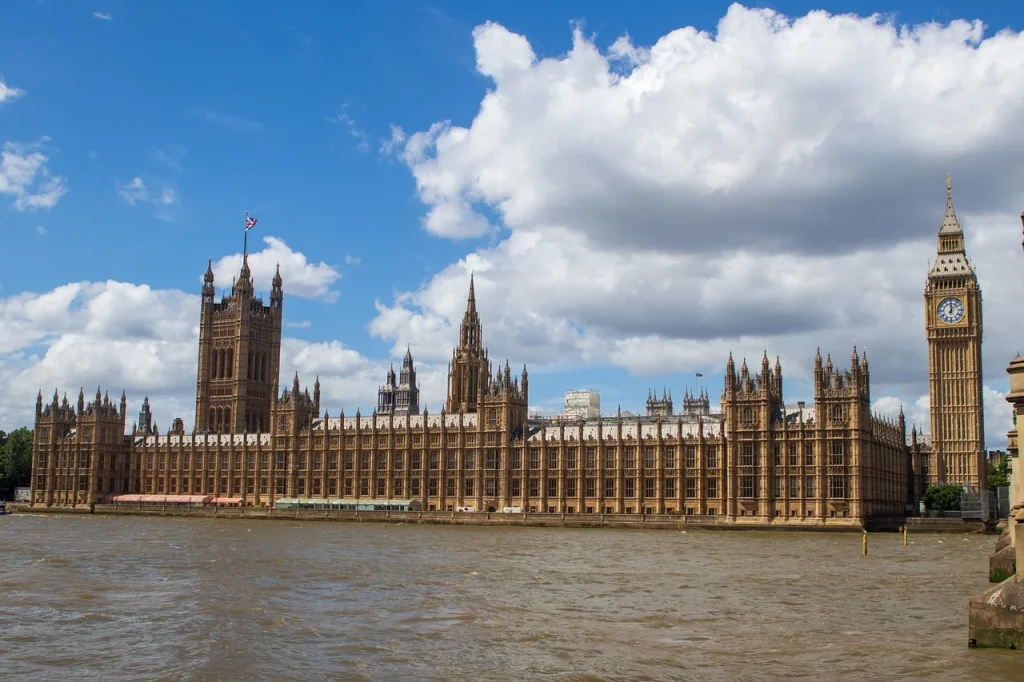
As part of the Autumn Budget 2025, Chancellor Rachel Reeves announced today that the Government will introduce new earned income disregards in Housing Benefit for people living in supported housing and temporary accommodation, which will reduce the financial cliff edge as people move into and progress in work. Responding to the Budget, Emma Haddad, Chief Executive of St Mungo’s, said: “Today’s budget offered a vital opportunity to address the record numbers of people being pushed into homelessness. More than 131,000 people are now trapped in temporary accommodation, and on a given night almost 5,000 sleep rough in England. At St Mungo’s, we see how vital work is to a person’s recovery from homelessness, which is why we warmly welcome the Chancellor’s decision to address the long-standing anomaly in the benefits system that discourages people in supported housing from entering work. This change follows years of persistent campaigning from St Mungo’s and the wider sector. It is reassuring to know our voices have been heard. These reforms will help clients living in supported accommodation return to work and rebuild their lives. We look forward to working with Government to ensure that this solution benefits everyone affected. However, we cannot ignore that we are in the middle of a homelessness crisis, which is being driven by a persistent shortage of affordable and social housing. Therefore, the Chancellor’s decision not to unfreeze Local Housing Allowance rates or lift the Benefit Cap is disappointing and a missed opportunity, particularly as it would have protected thousands from homelessness by bringing housing benefit in line with real rental prices. While we await the Government’s Homelessness Strategy, it is clear only so much progress can be achieved within our overstretched system without any additional funding.”
St Mungo’s Winter Wonders Auction returns for 2025

Our Winter Wonders Auction is back! Whether you’re looking for a gift for loved ones this festive season or just fancy treating yourself to something really special, St Mungo’s Winter Wonders Auction is your chance to bid on some incredible items and experiences, all while raising funds to help end homelessness and rebuild lives. We have some amazing prizes on offer this year including tickets and a meet and greet with Russell Howard, an afternoon on set and lunch with Location Location Location’s Phil Spencer, hospitality tickets to The Jonathon Ross Show, a signed Gavin and Stacy photograph, an Ottolenghi Christmas Hamper and so much more! Check out all the prizes and start bidding by clicking here. The online auction will close at 9pm on Monday 8 December 2025. We’ll be adding more special prizes along the way, so do check back on our auction listings before we close.
St Mungo’s calls for Chancellor to unfreeze LHA rates at Autumn Budget

This week, St Mungo’s, along with the wider homelessness sector, is calling on the Chancellor to unfreeze Local Housing Allowance rates at the upcoming Autumn Budget, so more people affected by homelessness can access safe, affordable housing in their local areas. What are Local Housing Allowance Rates? Local Housing Allowance (LHA) are the rates used to calculate how much housing benefit people can receive when they’re privately renting. LHA rates are meant to cover the lowest 30% of market rents in each local area. However, after years of freezes, only 2.7% of homes in Great Britain would be affordable for households receiving housing benefit. This significantly limits the number of affordable accommodation options within the private rented sector for people trying to move away from homelessness support services. Emma Haddad, Chief Executive of St Mungo’s, said: “Thousands of people are becoming trapped in a cycle of homelessness because of the lack of affordable housing. At St Mungo’s, we see people becoming homeless because they cannot afford to keep a roof over their head, and then struggling to find a decent home as they try to move away from rough sleeping. Safe and decent housing should be a right for everyone. People who rely on housing benefit are being priced out of having a home by Local Housing Allowance rates that have not and are not keeping up with soaring rental prices. By unfreezing Local Housing Allowance rates so they once again cover the lowest 30% of local rents, the Government can ensure people have access to an affordable home. The upcoming Autumn Budget is a crucial opportunity for the Chancellor to take the necessary action to ease pressure on Councils and the homelessness sector, and to prevent more people being pushed into the trauma of homelessness.”